


After nearly 150 years, Paris is finally giving American painter John Singer Sargent the recognition he deserves with a major solo exhibition at the Musée d'Orsay. The artist, who was once the darling of Parisian high society for a decade, saw his reputation in France severely damaged by a single scandalous painting – the famous "Madame X" with its provocatively slipped dress strap. Perhaps the city never quite forgave him for that artistic faux pas, or more accurately, never forgave the sour reaction it revealed about Paris's otherwise pleasure-loving elite when they scandalized the portrait of an American woman in a deeply décolleté evening gown.
The controversy erupted when Sargent (1856-1924) presented the work at the Paris Salon, making it the sensation of the season. Surprised by the intense negative reactions, the artist remorsefully retouched the life-sized portrait of the seductive wife of a wealthy shipowner, properly adjusting her rhinestone-decorated strap back into place. He also anonymized the name mentioned in the title to protect the 25-year-old model from malicious gossip. It has taken until now – a full century after his death in London – for France to honor the American painter with a solo exhibition, despite his long-standing status as one of the most popular artists of the late 19th and early 20th centuries in both Britain and the United States.
Ironically, Sargent's career began in France, specifically in Paris, where he spent a decade as the portrait painter of choice for the rich and beautiful. He painted both the nouveau riche Americans and representatives of the established aristocracy. The Florence-born son of globe-trotting Americans showed early artistic talent, prompting his parents to seek professional training for him in the French capital. Paris offered the sought-after painter Carolus-Duran's private studio instruction and the state-run École des Beaux-Arts, which immediately accepted Sargent. The 18-year-old impressed with his drawings of Italian antiquities brought from Rome, with their flattering shadow play and skillful perspectives, earning his place as a student.
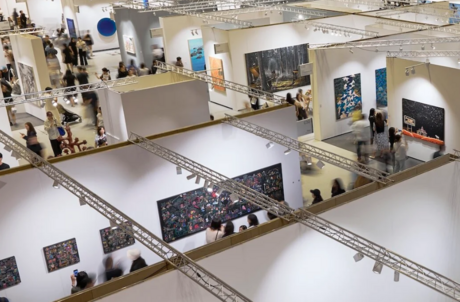
These early drawings hang at the beginning of the ninety-work exhibition at the Musée d'Orsay, which focuses on Sargent's Parisian production. Many paintings are returning to France for the first time. Today, the artist is valued primarily as a chronicler of the Belle Époque, who marshaled all his painterly skills to counter the competing medium of photography with sumptuous colors and striking presence. Under his brush, old master techniques achieved a final flowering.
The young painter showed no interest in the latest developments like Neo-Impressionism or Pointillism. Only one painting depicts a classic metropolitan subject of the time: strollers in the Jardin du Luxembourg, which were much more fashionable among his contemporaries. Sargent didn't care about such trends and preferred to find inspiration for his plein air paintings during his many travels from Paris. From Brittany and Venice, especially from Mediterranean countries, he brought back numerous drawings and watercolors that he amalgamated into exotic scenes. "Smoke of Ambergris" became a star piece, featuring a young Moroccan Berber woman in a tunic who, in the seclusion of a courtyard, holds a wide linen cloth over herself and a smoking vessel on the ground to inhale the rising vapors.
At the annual salons in the Palais de l'Industrie, where artists positioned themselves before critics and future patrons, Sargent cleverly combined a travel painting with a sensational portrait each year. His portrait "Dr. Pozzi at Home" (1881) would certainly have caused a stir. It shows the internationally famous gynecologist, who was also known for his numerous love affairs, in a deep red dressing gown. However, Sargent only presented this life-sized work in London and Brussels during his lifetime. Today it resides in the Hammer Museum in Los Angeles and continues to raise questions, inspiring works like Julian Barnes's book about the enigmatic Dr. Pozzi. Now it can be seen again at the site of its creation.
Even though these opulent portraits seemed anachronistic at the time, standing in the tradition of portraiture by Titian or van Dyck, they continue to exert great appeal today. "The Daughters of Edward Darley Boit" (1882), featuring four girls between ages four and fourteen in the grand hall of their parents' apartment with pompous vases, references Velázquez's "Las Meninas." The way they stand lost in space in their white aprons, looking at the viewer with large eyes, immediately makes one want to discover their further fate. The portrait of the Pailleron siblings shows the strain of 83 sittings that 15-year-old Édouard and ten-year-old Marie-Louise endured in Sargent's studio during 1880-81, which perhaps explains the tense atmosphere captured in the painting.
After the "Madame X" scandal, Sargent didn't immediately withdraw from France; only in 1886 did he permanently relocate to London. The portrait's subject also didn't become a pariah of high society. Even after his move, the painter maintained connections with friends in France and was among the supporters for purchasing Édouard Manet's "Olympia" – another scandal painting that now hangs in the Musée d'Orsay as one of the collection's highlights. The exhibition "John Singer Sargent: Glittering Paris" runs until January 11 at the Musée d'Orsay, offering visitors a chance to rediscover this master of Belle Époque portraiture in the city where his career began.