Farewell to Ahn Sung-ki, a Master Actor and a Moral Center of Korean Cinema
Jason Yim / Published January 5, 2026 07:18 AM
Jason Yim
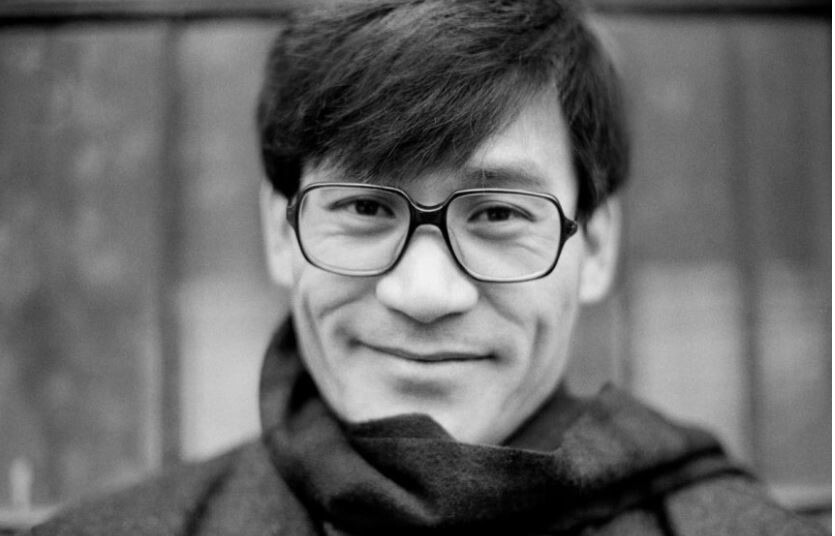
The official portrait of the late Ahn Sung-ki was taken not in a studio, but on a film set. The photographer was Koo Bohnchang, one of Korea’s most respected visual artists. The year was 1987. The location was Yonsei University’s Sinchon campus, temporarily transformed into a shooting site for Bae Chang-ho’s film Our Joyful Young Days. It is a quiet photograph. Ahn looks young, unguarded, almost transparent. According to his wife, Oh So-young, it was her favorite image of him—because it captured him at his purest.
That image now serves as Ahn Sung-ki’s memorial portrait, and it feels fitting. Few actors anywhere in the world have carried themselves with such moral clarity, such emotional restraint, and such unforced decency over a lifetime on screen.
Ahn’s death did not come as a shock, though it came as a loss no one was truly prepared for. Since he collapsed in 2019, stories of his illness had circulated quietly, almost respectfully, as if people were rehearsing their grief in advance. When news spread that he had been admitted to intensive care late last year, many understood what was coming. The portrait had already been chosen. The farewell, in some sense, had begun.
In South Korea, Ahn Sung-ki was often called “the nation’s actor,” a title so overused it usually means very little. In his case, it meant something precise. He belonged to no faction, no generation, no ideology. He was everyone’s actor—lover, brother, father, son. Because of that, the sorrow following his death feels immense yet oddly shared, divided among millions, each person carrying a manageable portion of the weight.
Born in 1952, Ahn began acting at the age of five, debuting in The Twilight Train (1957). Over the next seven decades, he appeared in more than 130 films, tracing the emotional and historical contours of modern Korean cinema. His body of work includes films marked by national trauma and political division—People of the Slum, Chilsu and Mansu, The South Korean Partisans, White Badge—as well as humane, tender dramas like Our Joyful Young Days, Festival, and The President Who Plays the Piano. What united them was not ideology, but empathy.
Ahn famously held personal rules about the roles he accepted. He avoided films that were narrowly ideological, gratuitously violent, or obsessed with spectacle at the expense of humanity. Even when he played villains—as in Lee Myung-se’s cult classic No Mercy for the Rude—he remained strangely sympathetic, a killer who felt less like a monster than a troubled neighbor. You could never quite hate him, and that was the point.
His finest performance may have been in Lee’s Men Are Men (1995), where he plays a perpetually overlooked office worker—a man crushed gently but relentlessly by everyday life. Ahn had a gift for portraying weakness without contempt, foolishness without cruelty. That ability, many believed, came from character as much as technique. It is hard to convincingly play goodness if you do not possess some of it yourself.
Politically charged roles never seemed to stain him. He played Vietnam War veterans, partisan leaders, and intellectuals burdened by ideology, yet no one ever accused Ahn Sung-ki himself of partisanship. In a deeply polarized society, this was no small achievement. He carried authority without intimidation, conviction without aggression.
Perhaps that is why his portrayals of leaders—kings, presidents, commanders—were so persuasive. In Kang Woo-suk’s Hanbando (2006), he plays a South Korean president who collaborates with the North against foreign aggression. No controversy followed. Audiences trusted him instinctively. If Ahn Sung-ki said this was possible, people were willing to believe it.
Off screen, he knew when to step back. By the early 2000s, he had begun choosing supporting roles, often positioning himself as a mediator or guide. On the set of Musa (2001), shot in bitter cold in northeastern China, he reportedly spent downtime tending a small fire so younger actors could warm themselves. It was a modest act, but it captured something essential about him.
In his final years, illness reduced his lines, then his appearances. In Hansan: Rising Dragon, his presence is brief, nearly wordless, but his face carries a quiet acceptance—as if he already understood the shape of his ending.
Ahn Sung-ki has died. With him, a generation seems to recede, like the tide pulling back from shore. The water will return, but the coastline will never look quite the same. For decades, he stood at the center of Korean cinema—not as its loudest voice, but as its conscience.
We bow our heads not only to an actor, but to a life lived with uncommon grace. May he rest in peace.
SayArt.net Jason Yim yimjongho1969@gmail.com
The official portrait of the late Ahn Sung-ki was taken not in a studio, but on a film set. The photographer was Koo Bohnchang, one of Korea’s most respected visual artists. The year was 1987. The location was Yonsei University’s Sinchon campus, temporarily transformed into a shooting site for Bae Chang-ho’s film Our Joyful Young Days. It is a quiet photograph. Ahn looks young, unguarded, almost transparent. According to his wife, Oh So-young, it was her favorite image of him—because it captured him at his purest.
That image now serves as Ahn Sung-ki’s memorial portrait, and it feels fitting. Few actors anywhere in the world have carried themselves with such moral clarity, such emotional restraint, and such unforced decency over a lifetime on screen.
Ahn’s death did not come as a shock, though it came as a loss no one was truly prepared for. Since he collapsed in 2019, stories of his illness had circulated quietly, almost respectfully, as if people were rehearsing their grief in advance. When news spread that he had been admitted to intensive care late last year, many understood what was coming. The portrait had already been chosen. The farewell, in some sense, had begun.
In South Korea, Ahn Sung-ki was often called “the nation’s actor,” a title so overused it usually means very little. In his case, it meant something precise. He belonged to no faction, no generation, no ideology. He was everyone’s actor—lover, brother, father, son. Because of that, the sorrow following his death feels immense yet oddly shared, divided among millions, each person carrying a manageable portion of the weight.
Born in 1952, Ahn began acting at the age of five, debuting in The Twilight Train (1957). Over the next seven decades, he appeared in more than 130 films, tracing the emotional and historical contours of modern Korean cinema. His body of work includes films marked by national trauma and political division—People of the Slum, Chilsu and Mansu, The South Korean Partisans, White Badge—as well as humane, tender dramas like Our Joyful Young Days, Festival, and The President Who Plays the Piano. What united them was not ideology, but empathy.
Ahn famously held personal rules about the roles he accepted. He avoided films that were narrowly ideological, gratuitously violent, or obsessed with spectacle at the expense of humanity. Even when he played villains—as in Lee Myung-se’s cult classic No Mercy for the Rude—he remained strangely sympathetic, a killer who felt less like a monster than a troubled neighbor. You could never quite hate him, and that was the point.
His finest performance may have been in Lee’s Men Are Men (1995), where he plays a perpetually overlooked office worker—a man crushed gently but relentlessly by everyday life. Ahn had a gift for portraying weakness without contempt, foolishness without cruelty. That ability, many believed, came from character as much as technique. It is hard to convincingly play goodness if you do not possess some of it yourself.
Politically charged roles never seemed to stain him. He played Vietnam War veterans, partisan leaders, and intellectuals burdened by ideology, yet no one ever accused Ahn Sung-ki himself of partisanship. In a deeply polarized society, this was no small achievement. He carried authority without intimidation, conviction without aggression.
Perhaps that is why his portrayals of leaders—kings, presidents, commanders—were so persuasive. In Kang Woo-suk’s Hanbando (2006), he plays a South Korean president who collaborates with the North against foreign aggression. No controversy followed. Audiences trusted him instinctively. If Ahn Sung-ki said this was possible, people were willing to believe it.
Off screen, he knew when to step back. By the early 2000s, he had begun choosing supporting roles, often positioning himself as a mediator or guide. On the set of Musa (2001), shot in bitter cold in northeastern China, he reportedly spent downtime tending a small fire so younger actors could warm themselves. It was a modest act, but it captured something essential about him.
In his final years, illness reduced his lines, then his appearances. In Hansan: Rising Dragon, his presence is brief, nearly wordless, but his face carries a quiet acceptance—as if he already understood the shape of his ending.
Ahn Sung-ki has died. With him, a generation seems to recede, like the tide pulling back from shore. The water will return, but the coastline will never look quite the same. For decades, he stood at the center of Korean cinema—not as its loudest voice, but as its conscience.
We bow our heads not only to an actor, but to a life lived with uncommon grace. May he rest in peace.
Warning: Trying to access array offset on value of type bool in /home/sayart/public_html/_libs/smarty/templates_c/103e99f6d7d08ee6b6541efd32c0ef2f33076acc_0.file.news_3t_view.tpl.php on line 56
Warning: Trying to access array offset on value of type bool in /home/sayart/public_html/_libs/smarty/templates_c/103e99f6d7d08ee6b6541efd32c0ef2f33076acc_0.file.news_3t_view.tpl.php on line 59