
Sayart.net - National Museum of Korea to Extend Hours, Add Outdoor Facilities to Ease Visitor Congestion

  • February 03, 2026 (Tue)
cover image

National Museum of Korea to Extend Hours, Add Outdoor Facilities to Ease Visitor Congestion

Published February 3, 2026 03:56 AM

The National Museum of Korea will open earlier and close earlier starting next month, while expanding outdoor leisure facilities, as part of a broader effort to manage overcrowding following a record surge in visitors.

Beginning March 16, the museum will open at 9:30 a.m. and close at 5:30 p.m., moving its operating hours forward by 30 minutes. The adjustment comes in response to growing congestion at the museum’s entrance, where visitors have reportedly been lining up well before opening time.

“Even though we open at 10 a.m., people are already waiting in line by 8:30 a.m.,” said museum Director You Hong-june during a New Year’s press conference on Tuesday. “We felt apologetic toward those who had to wait outside for hours, which led us to move up the opening time.”

In addition to extending hours, the museum plans to enhance visitor amenities outside the main building. By August, it will construct a new glasshouse-style café above the Mirror Pond Restaurant and build a stairway seating area connecting the museum and the pond. The project will involve removing an existing wall to create an open space where visitors can rest and socialize.

“We lacked sufficient cafés and dining spaces,” You said. “The new stairway will function as a place for people to sit and talk, similar to the outdoor steps at the Metropolitan Museum of Art in New York.”

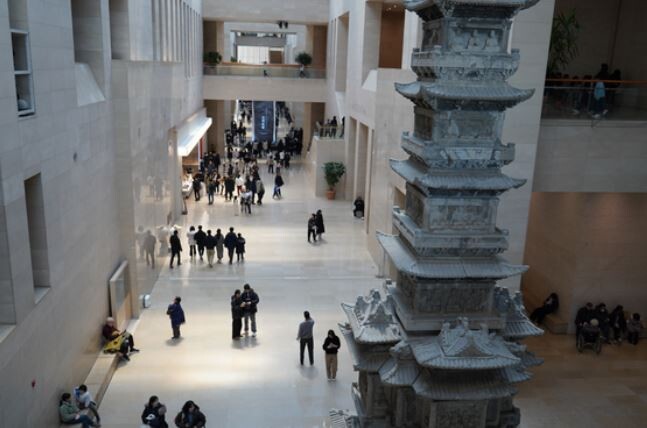
The changes come as the National Museum of Korea grapples with unprecedented visitor numbers. The museum recorded 6.5 million visitors in 2025, ranking it the fourth most-visited museum in the world after the Louvre, the Vatican Museums and the British Museum.

The surge has been attributed to growing domestic and international interest in Korean heritage, reinforced by global exposure to Korean culture. Museum officials pointed to Netflix’s hit animated film “KPop Demon Hunters” (2025), which features multiple references to traditional Korean symbols, as one contributing factor.

While the popularity marks a milestone, it has also brought challenges, including overcrowded galleries and parking shortages. The rising attention has further intensified discussions about the museum’s role as a primary gateway to Korean history and culture.

To address these issues, the museum plans to complete development of a customer relationship management system by the end of this year and conduct pilot testing of an online reservation system in the first half of next year. These measures are expected to lay the groundwork for introducing admission fees and a membership system.

“We are not charging admission to reduce the number of visitors,” You said. “We are pursuing paid admission to improve convenience and the overall visitor experience.”

The museum is also refreshing its permanent exhibitions to encourage repeat visits and longer stays. The painting and calligraphy galleries will reopen later this month, with rotating displays designed to offer returning visitors new content.

A life-size exhibition of Daedongyeojido, Korea’s first large-scale national map created by 19th-century cartographer Kim Jeong-ho, will be installed at “Path to History,” the museum’s main entrance space, starting Feb. 12.

Public engagement programs are also expanding. The annual “Dress Like a Museum Exhibit” contest—where participants dress as museum artifacts—will be held nationwide for the first time, with regional preliminaries and a final round scheduled for September.

Early figures suggest the museum’s initiatives are gaining traction. The National Museum of Korea welcomed approximately 670,000 visitors in January alone, marking a 30 percent increase from the same month last year.

SayArt.net
Joy nunimbos@gmail.com

The National Museum of Korea will open earlier and close earlier starting next month, while expanding outdoor leisure facilities, as part of a broader effort to manage overcrowding following a record surge in visitors.

Beginning March 16, the museum will open at 9:30 a.m. and close at 5:30 p.m., moving its operating hours forward by 30 minutes. The adjustment comes in response to growing congestion at the museum’s entrance, where visitors have reportedly been lining up well before opening time.

“Even though we open at 10 a.m., people are already waiting in line by 8:30 a.m.,” said museum Director You Hong-june during a New Year’s press conference on Tuesday. “We felt apologetic toward those who had to wait outside for hours, which led us to move up the opening time.”

In addition to extending hours, the museum plans to enhance visitor amenities outside the main building. By August, it will construct a new glasshouse-style café above the Mirror Pond Restaurant and build a stairway seating area connecting the museum and the pond. The project will involve removing an existing wall to create an open space where visitors can rest and socialize.

“We lacked sufficient cafés and dining spaces,” You said. “The new stairway will function as a place for people to sit and talk, similar to the outdoor steps at the Metropolitan Museum of Art in New York.”

The changes come as the National Museum of Korea grapples with unprecedented visitor numbers. The museum recorded 6.5 million visitors in 2025, ranking it the fourth most-visited museum in the world after the Louvre, the Vatican Museums and the British Museum.

The surge has been attributed to growing domestic and international interest in Korean heritage, reinforced by global exposure to Korean culture. Museum officials pointed to Netflix’s hit animated film “KPop Demon Hunters” (2025), which features multiple references to traditional Korean symbols, as one contributing factor.

While the popularity marks a milestone, it has also brought challenges, including overcrowded galleries and parking shortages. The rising attention has further intensified discussions about the museum’s role as a primary gateway to Korean history and culture.

To address these issues, the museum plans to complete development of a customer relationship management system by the end of this year and conduct pilot testing of an online reservation system in the first half of next year. These measures are expected to lay the groundwork for introducing admission fees and a membership system.

“We are not charging admission to reduce the number of visitors,” You said. “We are pursuing paid admission to improve convenience and the overall visitor experience.”

The museum is also refreshing its permanent exhibitions to encourage repeat visits and longer stays. The painting and calligraphy galleries will reopen later this month, with rotating displays designed to offer returning visitors new content.

A life-size exhibition of Daedongyeojido, Korea’s first large-scale national map created by 19th-century cartographer Kim Jeong-ho, will be installed at “Path to History,” the museum’s main entrance space, starting Feb. 12.

Public engagement programs are also expanding. The annual “Dress Like a Museum Exhibit” contest—where participants dress as museum artifacts—will be held nationwide for the first time, with regional preliminaries and a final round scheduled for September.

Early figures suggest the museum’s initiatives are gaining traction. The National Museum of Korea welcomed approximately 670,000 visitors in January alone, marking a 30 percent increase from the same month last year.

SayArt.net
Joy nunimbos@gmail.com
WEEKLY HOTISSUE