The global art market in 2026 is expected to enter a phase of cautious recalibration rather than dramatic expansion. After several years shaped by post-pandemic volatility, geopolitical tension, inflationary pressure, and shifting collector behavior, the market appears likely to settle into a more selective, structurally refined mode of growth—one driven less by speculation and more by long-term cultural and institutional value.
At the macro level, 2026 is widely anticipated to be a year of relative economic stabilization. While interest rates in major economies are expected to ease gradually, they are unlikely to return to the ultra-low levels that fueled the speculative boom of the early 2020s. As a result, the art market is projected to move away from fast-turnover investment logic toward a slower, more deliberate rhythm. Blue-chip works will likely retain their status as safe-haven assets, but the era of indiscriminate price surges appears to be firmly behind us.
In this environment, quality is expected to matter more than ever. Museums, foundations, and serious private collectors are likely to focus on historically validated artists, well-documented works, and narratives that can withstand curatorial and scholarly scrutiny. Postwar masters, modernist anchors, and canonical contemporary figures are expected to maintain stable demand, though without the explosive growth seen in previous cycles. At the same time, overlooked artists—particularly women, non-Western modernists, and figures previously marginalized by Euro-American art history—are expected to gain further institutional attention, continuing a trend that has reshaped acquisition policies over the past decade.
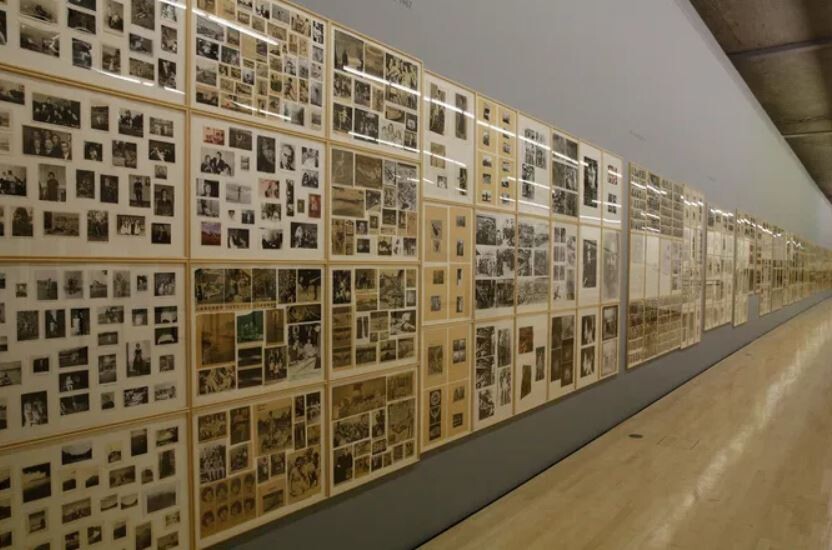
If the 2026 global art market were represented by a single artwork, it would be Gerhard Richter’s Atlas. Rather than offering a definitive image or a bold prophecy, Atlas assembles photographs, sketches, documents, and fragments of abstraction into a vast visual archive. It embodies a way of understanding the world after the age of certainty—through observation, accumulation, and cautious reordering rather than grand declarations. In this sense, it mirrors the 2026 art market, which is expected to be shaped not by dramatic booms or collapses, but by the parallel interplay of economics, institutions, regions, technology, and ethics. Image courtesy of the artist’s official website (gerhard-richter.com).
The ultra-contemporary segment, by contrast, is expected to face ongoing correction. While it is unlikely to disappear, the market for emerging artists driven primarily by social media visibility and rapid auction turnover is anticipated to become more restrained. Collectors burned by sudden price drops are expected to demand clearer critical frameworks, gallery support, and institutional validation before committing. In this sense, 2026 may mark a maturation point for younger collectors, many of whom are shifting from hype-driven buying to more research-oriented collecting practices.
Geographically, the art market in 2026 is expected to become increasingly multipolar. The United States is likely to remain the dominant hub, particularly in high-value transactions and museum influence. However, Asia—especially South Korea, Japan, and parts of Southeast Asia—is expected to consolidate its role not merely as a consumer market but as a producer of discourse, exhibitions, and curatorial leadership. China’s market, while still significant, is expected to remain inward-looking, shaped by domestic policy and regulation rather than aggressive global expansion.
Europe, meanwhile, is expected to maintain its intellectual and institutional weight, even as its commercial dominance continues to fragment across cities rather than concentrating in a single capital. Art fairs in Basel, Paris, and London are expected to emphasize curatorial rigor and cross-disciplinary programming, responding to growing fatigue with purely transactional models.
Technology is also expected to play a quieter but more integrated role. After the rapid rise and fall of speculative NFT markets, digital tools are likely to be absorbed into existing art-world structures rather than positioned as disruptive alternatives. Blockchain-based provenance systems, digital archives, and hybrid exhibition formats are expected to gain practical relevance, even as grand narratives about “the future of art” recede.
Perhaps most notably, 2026 is expected to be a year in which the art market increasingly aligns itself with broader social and philosophical concerns. Issues such as sustainability, labor ethics, cultural restitution, and the role of art in times of political uncertainty are expected to shape both programming and collecting. Rather than standing apart from the world’s crises, the art market is likely to reflect them—sometimes uncomfortably, but with growing self-awareness.
In sum, the global art market in 2026 is expected to favor depth over speed, context over spectacle, and continuity over disruption. It may not be a year of record-breaking sales, but it is likely to be remembered as a period in which the market learned to breathe more slowly—and think more carefully about what, and why, it values.
SayArt.net Maria Kim sayart2022@gmail.com
The global art market in 2026 is expected to enter a phase of cautious recalibration rather than dramatic expansion. After several years shaped by post-pandemic volatility, geopolitical tension, inflationary pressure, and shifting collector behavior, the market appears likely to settle into a more selective, structurally refined mode of growth—one driven less by speculation and more by long-term cultural and institutional value.
At the macro level, 2026 is widely anticipated to be a year of relative economic stabilization. While interest rates in major economies are expected to ease gradually, they are unlikely to return to the ultra-low levels that fueled the speculative boom of the early 2020s. As a result, the art market is projected to move away from fast-turnover investment logic toward a slower, more deliberate rhythm. Blue-chip works will likely retain their status as safe-haven assets, but the era of indiscriminate price surges appears to be firmly behind us.
In this environment, quality is expected to matter more than ever. Museums, foundations, and serious private collectors are likely to focus on historically validated artists, well-documented works, and narratives that can withstand curatorial and scholarly scrutiny. Postwar masters, modernist anchors, and canonical contemporary figures are expected to maintain stable demand, though without the explosive growth seen in previous cycles. At the same time, overlooked artists—particularly women, non-Western modernists, and figures previously marginalized by Euro-American art history—are expected to gain further institutional attention, continuing a trend that has reshaped acquisition policies over the past decade.
If the 2026 global art market were represented by a single artwork, it would be Gerhard Richter’s Atlas. Rather than offering a definitive image or a bold prophecy, Atlas assembles photographs, sketches, documents, and fragments of abstraction into a vast visual archive. It embodies a way of understanding the world after the age of certainty—through observation, accumulation, and cautious reordering rather than grand declarations. In this sense, it mirrors the 2026 art market, which is expected to be shaped not by dramatic booms or collapses, but by the parallel interplay of economics, institutions, regions, technology, and ethics. Image courtesy of the artist’s official website (gerhard-richter.com).
The ultra-contemporary segment, by contrast, is expected to face ongoing correction. While it is unlikely to disappear, the market for emerging artists driven primarily by social media visibility and rapid auction turnover is anticipated to become more restrained. Collectors burned by sudden price drops are expected to demand clearer critical frameworks, gallery support, and institutional validation before committing. In this sense, 2026 may mark a maturation point for younger collectors, many of whom are shifting from hype-driven buying to more research-oriented collecting practices.
Geographically, the art market in 2026 is expected to become increasingly multipolar. The United States is likely to remain the dominant hub, particularly in high-value transactions and museum influence. However, Asia—especially South Korea, Japan, and parts of Southeast Asia—is expected to consolidate its role not merely as a consumer market but as a producer of discourse, exhibitions, and curatorial leadership. China’s market, while still significant, is expected to remain inward-looking, shaped by domestic policy and regulation rather than aggressive global expansion.
Europe, meanwhile, is expected to maintain its intellectual and institutional weight, even as its commercial dominance continues to fragment across cities rather than concentrating in a single capital. Art fairs in Basel, Paris, and London are expected to emphasize curatorial rigor and cross-disciplinary programming, responding to growing fatigue with purely transactional models.
Technology is also expected to play a quieter but more integrated role. After the rapid rise and fall of speculative NFT markets, digital tools are likely to be absorbed into existing art-world structures rather than positioned as disruptive alternatives. Blockchain-based provenance systems, digital archives, and hybrid exhibition formats are expected to gain practical relevance, even as grand narratives about “the future of art” recede.
Perhaps most notably, 2026 is expected to be a year in which the art market increasingly aligns itself with broader social and philosophical concerns. Issues such as sustainability, labor ethics, cultural restitution, and the role of art in times of political uncertainty are expected to shape both programming and collecting. Rather than standing apart from the world’s crises, the art market is likely to reflect them—sometimes uncomfortably, but with growing self-awareness.
In sum, the global art market in 2026 is expected to favor depth over speed, context over spectacle, and continuity over disruption. It may not be a year of record-breaking sales, but it is likely to be remembered as a period in which the market learned to breathe more slowly—and think more carefully about what, and why, it values.
Warning: Trying to access array offset on value of type bool in /home/sayart/public_html/_libs/smarty/templates_c/103e99f6d7d08ee6b6541efd32c0ef2f33076acc_0.file.news_3t_view.tpl.php on line 56
Warning: Trying to access array offset on value of type bool in /home/sayart/public_html/_libs/smarty/templates_c/103e99f6d7d08ee6b6541efd32c0ef2f33076acc_0.file.news_3t_view.tpl.php on line 59