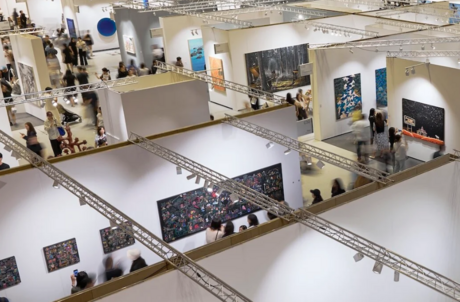



Christian Marclay's legendary 24-hour film "The Clock" is making its Berlin debut at the New National Gallery, transforming the prestigious art venue into a unique cinema experience. The monumental work, which many critics consider to be potentially the best film ever made, presents an unprecedented challenge to viewers: can anyone actually endure watching a clock for an entire day?
The film operates as both an artistic masterpiece and a functional timepiece, constructed from thousands of movie clips featuring clocks or scenes where characters urgently need to be somewhere at a specific time. At 10:46 AM, viewers witness a woman refusing to get out of bed. At 10:47 AM, a boy asks about his breakfast. By 10:48 AM, someone calls out "Good morning." Each moment in Marclay's creation corresponds precisely to real time, creating a hypnotic synchronization between art and reality.
This marks the first time "The Clock" has been screened in Berlin, representing a significant cultural event for the German capital's art scene. The New National Gallery's decision to host this ambitious work demonstrates the institution's commitment to presenting challenging contemporary art that pushes the boundaries of traditional exhibition formats.
The film's construction from tens of thousands of film sequences creates a mesmerizing collage of cinematic moments, all united by the common thread of time. Marclay's genius lies in how he has assembled these disparate clips into a coherent narrative that functions as an actual clock, making viewers acutely aware of time's passage while simultaneously losing themselves in the endless stream of images.
The exhibition poses a fascinating question about endurance, attention spans, and the nature of time itself in our modern world. Whether anyone can actually watch the complete 24-hour cycle remains to be seen, but the attempt promises to be an unforgettable experience for Berlin's art enthusiasts.