NFM Releases Landmark Report on Village Beliefs Across Gangwon: Which Spirits Protected These Mountain and Coastal Communities?
Published December 11, 2025 08:33 AM
Jason Yim
South Korea may be geographically small, but its traditional beliefs vary widely from region to region. Many Koreans casually encounter ancestral rites or seasonal rituals on television or at palaces, yet few have a clear grasp of the country’s indigenous belief systems. A new report now offers an unprecedented overview: the National Folk Museum of Korea (NFM) has published the first comprehensive study covering the entirety of Gangwon Special Self-Governing Province’s village belief traditions. The two-volume set documents rituals in 97 villages and compiles the transmission status of 2,125 communities—an invaluable window into the structure and evolution of Gangwon’s local spiritual culture.
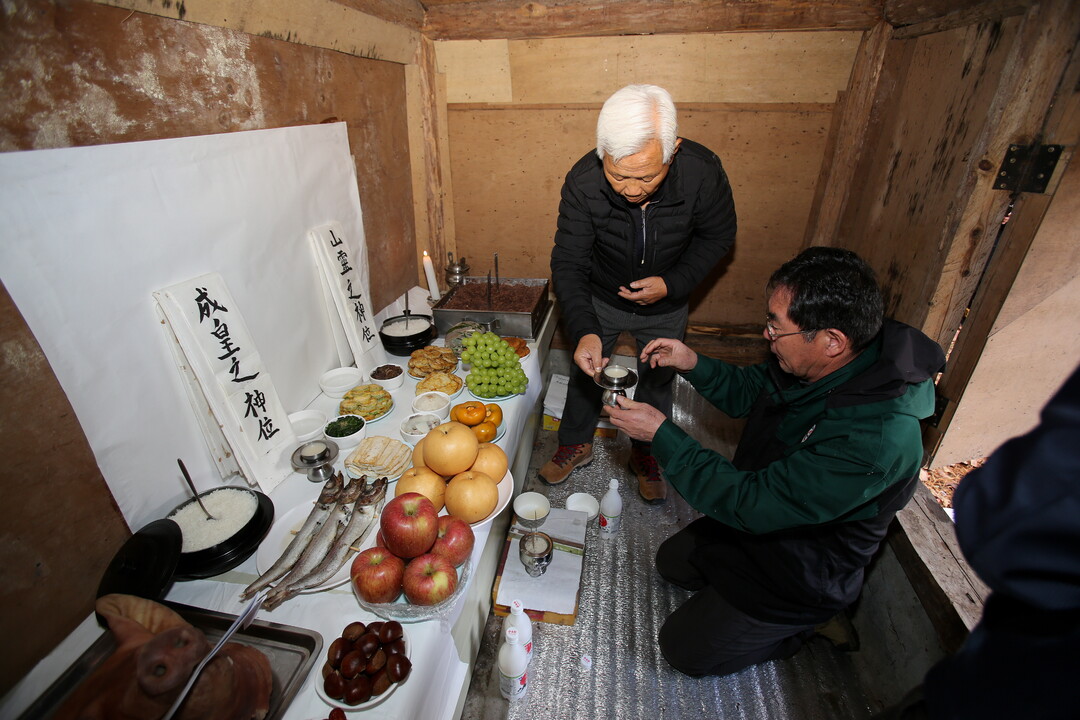
Gangwon’s village beliefs differ sharply between its inland and coastal regions. In the mountainous interior, known as Yeongseo, villages have long centered their rituals on the Mountain Spirit (Sanshin) and the Village Guardian Spirit (Seonghwang). In places such as Seomyeon in Chuncheon, Sanshinje and Seonghwangje coexist, often held at natural “spirit bodies” such as sacred trees, rocks, or small village shrines. The repeated use of natural features as vessels for divine presence is a defining feature of Yeongseo’s belief structure.
Jangseungje, a Ritual Honoring the Village Guardian Poles (Jangseung) in Batchi-ri, Dongsan-myeon, Chuncheon
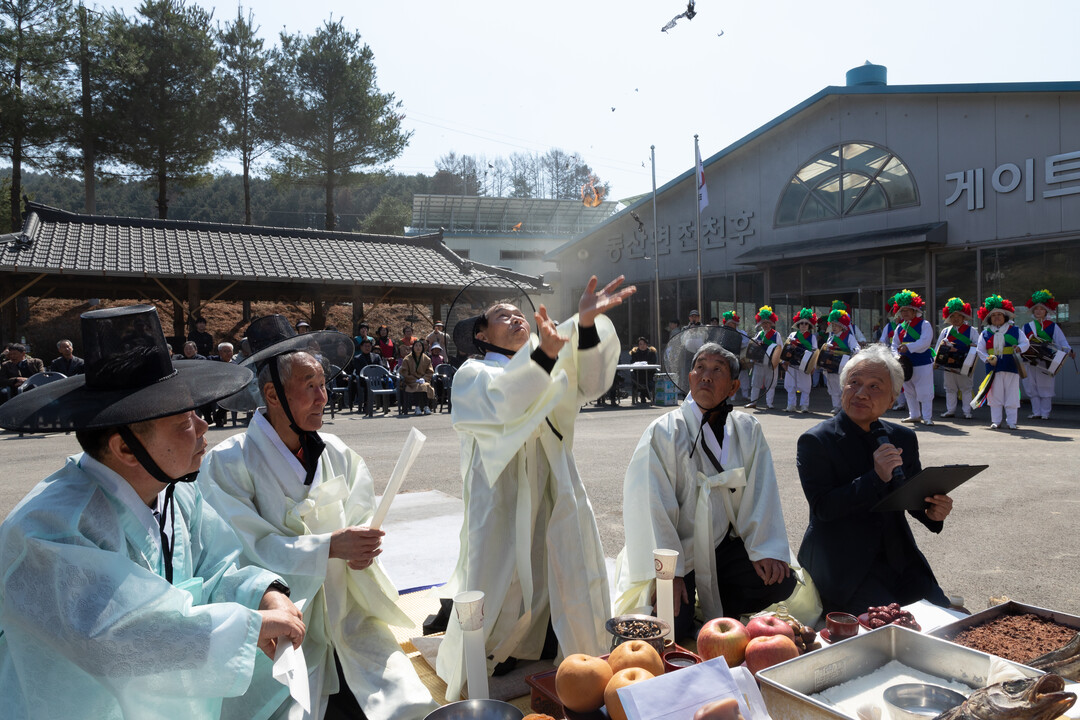
Along the East Sea coast, the Yeongdong region shows a different pattern, shaped by fishing and maritime livelihoods. Villages in Gangneung, Sokcho, and Goseong conduct Seonghwang rituals that include prayers for abundant catches, safe voyages, and—reflecting today’s tourism economy—the safety of visitors. Many of these rituals are organized by local fishermen’s cooperatives, and in places like Jumunjin, the Seonghwangje and Pungeogut (fishing rite) remain active.
Some coastal communities even distinguish between a male and female Seonghwang spirit, maintaining two separate sacred groves and holding independent rites for each—an example seen in Munam 1-ri of Goseong. This practice contrasts with Yeongseo, where gender distinctions in deities are uncommon.
Gangwon also preserves rare examples of historically inflected spiritual figures. In areas such as Yeongwol and Jeongseon, villagers venerate King Danjong, the deposed 15th-century monarch, as a guardian deity—an instance where local memory and political tragedy have been transformed into a unique spiritual system.
The Taebaeksan mountain belt presents yet another layer. Here, the Mountain Spirit of Taebaeksan is revered as a supreme deity above local mountain spirits. Rituals in Samcheok and Taebaek converge symbolically toward Taebaeksan, reflecting how Gangwon’s rugged terrain shaped a hierarchical spiritual cosmology.
Across both volumes, the physical forms of divine presence—known as shint’e (spirit bodies)—also diverge. Yeongseo villages most often regard ancient zelkova, cherry, or pine trees as the seat of a deity, while Yeongdong communities frequently designate coastal rocks, sea cliffs, or bamboo groves as sacred. The “Seonghwang Rock” of Sodolsan in Gangneung exemplifies how the sea and spirituality merge in iconic local landscapes.
The survival of these traditions varies by environment. Many mountain villages face ritual discontinuation due to aging populations and depopulation, while coastal communities often maintain active ceremonies thanks to the ongoing vitality of fishing and tourism. Sokcho’s Daepo-dong Seonghwangje and Yongwangje remain among the most robust examples.
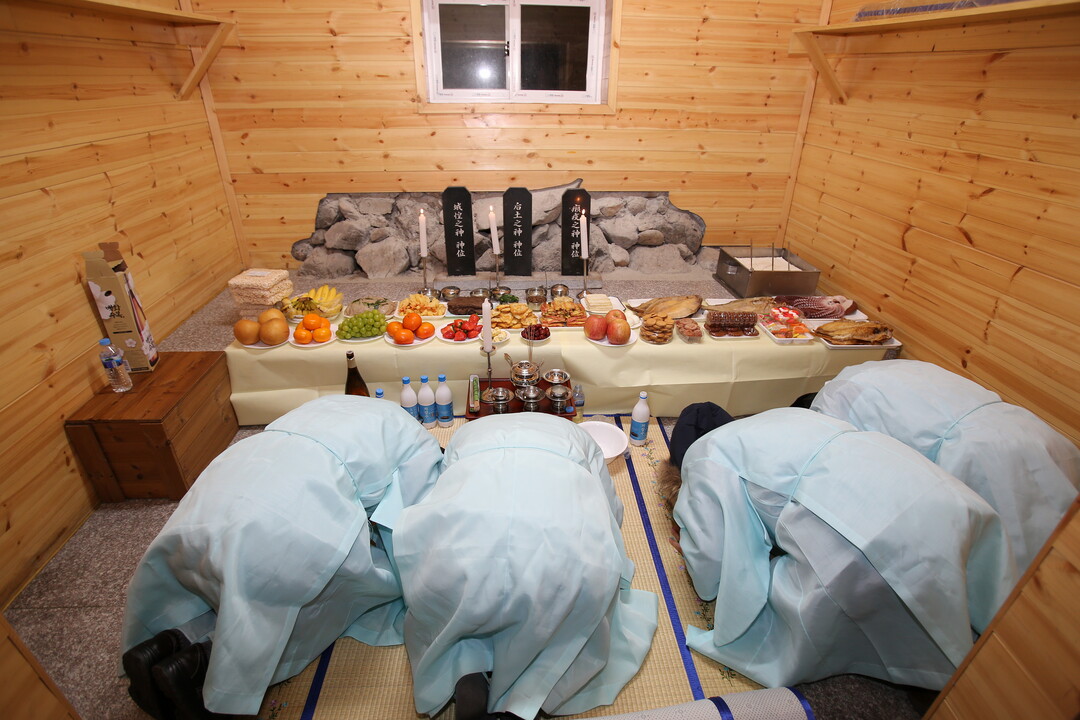
Both volumes also highlight a recent trend: the reconstruction and expansion of dangjip—small shrines that house village deities. Whereas older shrines were simple structures holding only spirit tablets or sacred objects, newer ones are built large enough to host community ritual gatherings, reflecting the reinterpretation of village beliefs as tools for rebuilding communal cohesion.
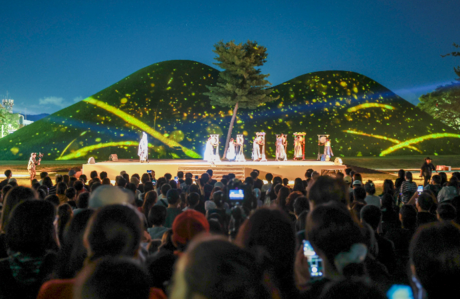
Daeseonang Gosa, a Village Guardian Rite Praying for Communal Safety and Prosperity, in Gyogok-ri, Geundeok-myeon, Samcheok
A Comprehensive Map of 2,125 Communities’ Ritual Traditions The new report marks the first attempt to fully integrate Gangwon’s village belief data into a single system. It covers 18 cities and counties, selecting 4–12 villages per region for in-depth fieldwork and compiling transmission data for all 2,125 villages. Among them, 746 entries are newly investigated or reorganized, combined with 1,377 cases of previous research from the 1960s to 2006, effectively creating a 60-year archive of Gangwon’s spiritual landscape. Dividing the publication into Gangwon 1 (Yeongseo) and Gangwon 2 (Yeongdong) allows for clearer comparison between inland and coastal belief systems.
A key strength of the project lies in its local researcher–centered methodology. Forty-three of the 110 field researchers were Gangwon-based scholars, who spent seven months conducting site visits across the province. Their participation minimized interpretative bias and enabled finer distinctions between regional practices.
The Gangwon study follows earlier investigations of Chungcheong, Jeolla–Jeju, and Gyeongsang regions, with the Seoul–Gyeonggi survey scheduled for 2026. The NFM notes that the report “not only systematizes the foundations of regional community beliefs but also establishes a cooperative model with local researchers, contributing to the long-term sustainability of Korean folk culture.”
The full report is available for download on the National Folk Museum of Korea’s website.
SayArt.net Jason Yim yimjongho1969@gmail.com
South Korea may be geographically small, but its traditional beliefs vary widely from region to region. Many Koreans casually encounter ancestral rites or seasonal rituals on television or at palaces, yet few have a clear grasp of the country’s indigenous belief systems. A new report now offers an unprecedented overview: the National Folk Museum of Korea (NFM) has published the first comprehensive study covering the entirety of Gangwon Special Self-Governing Province’s village belief traditions. The two-volume set documents rituals in 97 villages and compiles the transmission status of 2,125 communities—an invaluable window into the structure and evolution of Gangwon’s local spiritual culture.
Gangwon’s village beliefs differ sharply between its inland and coastal regions. In the mountainous interior, known as Yeongseo, villages have long centered their rituals on the Mountain Spirit (Sanshin) and the Village Guardian Spirit (Seonghwang). In places such as Seomyeon in Chuncheon, Sanshinje and Seonghwangje coexist, often held at natural “spirit bodies” such as sacred trees, rocks, or small village shrines. The repeated use of natural features as vessels for divine presence is a defining feature of Yeongseo’s belief structure.
Jangseungje, a Ritual Honoring the Village Guardian Poles (Jangseung) in Batchi-ri, Dongsan-myeon, Chuncheon
Along the East Sea coast, the Yeongdong region shows a different pattern, shaped by fishing and maritime livelihoods. Villages in Gangneung, Sokcho, and Goseong conduct Seonghwang rituals that include prayers for abundant catches, safe voyages, and—reflecting today’s tourism economy—the safety of visitors. Many of these rituals are organized by local fishermen’s cooperatives, and in places like Jumunjin, the Seonghwangje and Pungeogut (fishing rite) remain active.
Some coastal communities even distinguish between a male and female Seonghwang spirit, maintaining two separate sacred groves and holding independent rites for each—an example seen in Munam 1-ri of Goseong. This practice contrasts with Yeongseo, where gender distinctions in deities are uncommon.
Gangwon also preserves rare examples of historically inflected spiritual figures. In areas such as Yeongwol and Jeongseon, villagers venerate King Danjong, the deposed 15th-century monarch, as a guardian deity—an instance where local memory and political tragedy have been transformed into a unique spiritual system.
The Taebaeksan mountain belt presents yet another layer. Here, the Mountain Spirit of Taebaeksan is revered as a supreme deity above local mountain spirits. Rituals in Samcheok and Taebaek converge symbolically toward Taebaeksan, reflecting how Gangwon’s rugged terrain shaped a hierarchical spiritual cosmology.
Across both volumes, the physical forms of divine presence—known as shint’e (spirit bodies)—also diverge. Yeongseo villages most often regard ancient zelkova, cherry, or pine trees as the seat of a deity, while Yeongdong communities frequently designate coastal rocks, sea cliffs, or bamboo groves as sacred. The “Seonghwang Rock” of Sodolsan in Gangneung exemplifies how the sea and spirituality merge in iconic local landscapes.
The survival of these traditions varies by environment. Many mountain villages face ritual discontinuation due to aging populations and depopulation, while coastal communities often maintain active ceremonies thanks to the ongoing vitality of fishing and tourism. Sokcho’s Daepo-dong Seonghwangje and Yongwangje remain among the most robust examples.
Both volumes also highlight a recent trend: the reconstruction and expansion of dangjip—small shrines that house village deities. Whereas older shrines were simple structures holding only spirit tablets or sacred objects, newer ones are built large enough to host community ritual gatherings, reflecting the reinterpretation of village beliefs as tools for rebuilding communal cohesion.
Daeseonang Gosa, a Village Guardian Rite Praying for Communal Safety and Prosperity, in Gyogok-ri, Geundeok-myeon, Samcheok
A Comprehensive Map of 2,125 Communities’ Ritual Traditions The new report marks the first attempt to fully integrate Gangwon’s village belief data into a single system. It covers 18 cities and counties, selecting 4–12 villages per region for in-depth fieldwork and compiling transmission data for all 2,125 villages. Among them, 746 entries are newly investigated or reorganized, combined with 1,377 cases of previous research from the 1960s to 2006, effectively creating a 60-year archive of Gangwon’s spiritual landscape. Dividing the publication into Gangwon 1 (Yeongseo) and Gangwon 2 (Yeongdong) allows for clearer comparison between inland and coastal belief systems.
A key strength of the project lies in its local researcher–centered methodology. Forty-three of the 110 field researchers were Gangwon-based scholars, who spent seven months conducting site visits across the province. Their participation minimized interpretative bias and enabled finer distinctions between regional practices.
The Gangwon study follows earlier investigations of Chungcheong, Jeolla–Jeju, and Gyeongsang regions, with the Seoul–Gyeonggi survey scheduled for 2026. The NFM notes that the report “not only systematizes the foundations of regional community beliefs but also establishes a cooperative model with local researchers, contributing to the long-term sustainability of Korean folk culture.”
The full report is available for download on the National Folk Museum of Korea’s website.
Warning: Trying to access array offset on value of type bool in /home/sayart/public_html/_libs/smarty/templates_c/103e99f6d7d08ee6b6541efd32c0ef2f33076acc_0.file.news_3t_view.tpl.php on line 56
Warning: Trying to access array offset on value of type bool in /home/sayart/public_html/_libs/smarty/templates_c/103e99f6d7d08ee6b6541efd32c0ef2f33076acc_0.file.news_3t_view.tpl.php on line 59