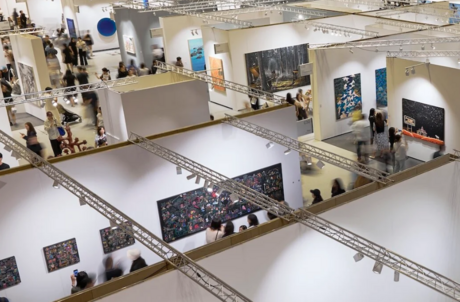



The National Gallery of Victoria (NGV) has opened a groundbreaking exhibition celebrating the extraordinary contributions of female photographers from the early 20th century through the mid-1970s. "Women Photographers 1900 to 1975: A Legacy of Light" honors the diverse and innovative photographic practices of more than 80 artists who worked during this transformative period in photography history. The exhibition will remain open through May 2026, offering visitors an extensive opportunity to explore this remarkable collection.
The exhibition features an impressive array of works spanning multiple continents and photographic movements. Among the highlighted pieces is Barbara Morgan's iconic "Letter to the world" from 1940, a gelatin silver photograph that exemplifies the American photographer's innovative approach to capturing movement and expression. Morgan, who lived from 1900 to 1992, was renowned for her dance photography and experimental techniques that pushed the boundaries of the medium.
Australian photography is well-represented in the collection, showcasing the country's rich photographic heritage. Olive Cotton's "Girl with mirror" from 1938 demonstrates the sophisticated compositional skills of this influential Australian photographer who lived from 1911 to 2003. The exhibition also includes Ruth Hollick's contemplative work "Thought" from 1921, representing the early development of artistic photography in Australia by this pioneering photographer who lived from 1883 to 1977.
The collaborative German photography duo ringl + pit, consisting of Ellen Auerbach and Grete Stern, is represented through their striking 1931 work "Komol," which was printed in 1984 as edition 1 of 6. This partnership, active from 1930 to 1933, exemplified the experimental spirit of European photography before the artists' eventual migration to different continents due to political upheaval. Auerbach's journey took her from Germany to Palestine and finally to the United States, while Stern relocated to Argentina.
American documentary and street photography traditions are showcased through several masterful works. Consuelo Kanaga's "She is a tree of life to them" from the 1950s represents the social consciousness that characterized much of her work during her lifetime from 1894 to 1978. Helen Levitt's "New York" from around 1940 captures the vibrant street life that made her one of the most celebrated urban photographers of her generation, spanning from 1913 to 2009.
The exhibition traces photography's evolution from its earliest artistic expressions to more contemporary approaches. Gertrude Käsebier's "The gargoyle" from around 1900, created using the platinum print process, represents the pictorialist movement and the sophisticated techniques employed by this American pioneer who lived from 1852 to 1934. The show progresses through various decades, including Lucia Moholy's architectural documentation "Bauhaus residences Dessau, kitchen sideboard" from 1926, which captures the modernist aesthetic of the influential German design school.
More contemporary works demonstrate the medium's continued evolution and experimentation. Sue Ford's "Temporarily" from 1969, part of "The Tide Recedes" series created between 1969 and 1971, represents the conceptual approaches that emerged in later decades. Ford, an Australian photographer who lived from 1943 to 2009, exemplified the innovative spirit that continued to drive women's contributions to photography.
The exhibition also highlights the international scope of women's photographic achievements through works by artists who crossed cultural and geographical boundaries. Dorothea Lange's "Towards Los Angeles, California" from 1936, printed around 1975, showcases the documentary tradition that made her one of America's most important social photographers. Dora Maar's "Untitled (Study of Beauty)" from 1936 represents the French photographer's sophisticated approach to portraiture and her connections to the Surrealist movement.
"Women Photographers 1900 to 1975: A Legacy of Light" stands as a comprehensive survey of women's vital contributions to photography during a period of tremendous artistic and social change. The exhibition not only celebrates individual achievements but also demonstrates the collective impact these artists had on shaping photography as both an art form and a means of documenting the human experience across cultures and continents.