
Sayart.net - National Museum of Korea Launches Permanent Islamic Art Gallery Featuring Ancient Quran Manuscripts

  • December 10, 2025 (Wed)

National Museum of Korea Launches Permanent Islamic Art Gallery Featuring Ancient Quran Manuscripts

Sayart / Published November 27, 2025 01:55 AM
  • -
  • +
  • print

The National Museum of Korea officially opened its new permanent Islamic Art Gallery on November 22, showcasing an impressive collection of 83 Islamic artworks spanning from the seventh to 19th centuries. The exhibition, developed in partnership with the Museum of Islamic Art in Doha, Qatar, features remarkable pieces including early manuscripts of the Quran, royal carpets, exquisite ceramics, and delicate jade artifacts.

Titled "Islamic Art: A Journey of Splendor," the gallery highlights the rich cultural diversity and visual spectrum of Islamic art across different eras and regions. Among the most significant pieces on display is a Quran bifolio, considered one of the world's oldest surviving manuscripts of Islam's holy book, believed to date back to the late seventh to early eighth centuries. This ancient relic serves as an important resource for understanding the calligraphy techniques and binding methods used before the full development of Islamic manuscript culture.

The connection between Korea and the Islamic world spans centuries, despite Islamic culture being relatively new to modern Korea. Archaeological discoveries have revealed Persian artifacts in tombs from the Silla Kingdom (57 B.C.-A.D. 935), while merchants from the Goryeo Dynasty (918-1392) actively traded with Arab counterparts, helping spread Korea's name throughout the Muslim world.

The exhibition is organized into three thematic sections rather than following a chronological order. The first section, "Religious Art of Islamic World," explores the fundamental relationship between faith and art in Islamic culture, featuring early Quran manuscripts and large-scale editions from the Timurid Dynasty (1370-1507). The second section, "Embrace and Expansion of Islamic Culture," demonstrates the aesthetic fusion created as Islamic culture spread from the Arabian Peninsula through contact with diverse regions, highlighting advanced techniques and sculptural beauty in glasswork, ceramics, and metalwork.

The final section, "Islamic Courtly Culture and Manuscripts," showcases the sophisticated artistic traditions that flourished under three major Islamic empires: the Ottoman Empire (1299-1922), the Safavid Empire (1501-1736), and the Mughal Empire (1526-1857). Visitors can admire luxurious carpets, intricate textiles, and elaborate ornaments that reflect the authority, decorative artistry, and aesthetic refinement pursued by each imperial court.

National Museum of Korea Director You Hong June emphasized the educational significance of the exhibition, stating, "We hope that this is an opportunity for visitors to accurately understand Islamic culture, which has flourished brilliantly across eras and regions, and reflect on the diversity of human culture and the value of coexistence." Museum of Islamic Art Director Shaika Nasser Al-Nassr added, "Based on religious foundation, Islamic civilization expanded to Europe, Africa and Asia. It accepted technologies and culture from various regions while developing distinctive aesthetics and artistic traditions."

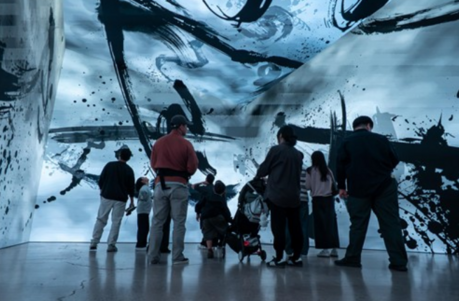
The gallery features a unique media art installation that reinterprets the famous Damascus Room from the Museum of Islamic Art in Doha, offering visitors insight into the lifestyle and spatial aesthetics of Islamic aristocrats from historical periods. This interactive element provides a resting space where visitors can immerse themselves in the atmospheric beauty of traditional Islamic interior design.

The permanent Islamic Art Gallery represents a significant cultural milestone for Korea, providing local audiences with unprecedented access to Islamic artistic heritage. The exhibition will run through October 11 of next year, offering an extended opportunity for visitors to explore and appreciate the remarkable artistic achievements of Islamic civilization throughout history.


The National Museum of Korea officially opened its new permanent Islamic Art Gallery on November 22, showcasing an impressive collection of 83 Islamic artworks spanning from the seventh to 19th centuries. The exhibition, developed in partnership with the Museum of Islamic Art in Doha, Qatar, features remarkable pieces including early manuscripts of the Quran, royal carpets, exquisite ceramics, and delicate jade artifacts.

Titled "Islamic Art: A Journey of Splendor," the gallery highlights the rich cultural diversity and visual spectrum of Islamic art across different eras and regions. Among the most significant pieces on display is a Quran bifolio, considered one of the world's oldest surviving manuscripts of Islam's holy book, believed to date back to the late seventh to early eighth centuries. This ancient relic serves as an important resource for understanding the calligraphy techniques and binding methods used before the full development of Islamic manuscript culture.

The connection between Korea and the Islamic world spans centuries, despite Islamic culture being relatively new to modern Korea. Archaeological discoveries have revealed Persian artifacts in tombs from the Silla Kingdom (57 B.C.-A.D. 935), while merchants from the Goryeo Dynasty (918-1392) actively traded with Arab counterparts, helping spread Korea's name throughout the Muslim world.

The exhibition is organized into three thematic sections rather than following a chronological order. The first section, "Religious Art of Islamic World," explores the fundamental relationship between faith and art in Islamic culture, featuring early Quran manuscripts and large-scale editions from the Timurid Dynasty (1370-1507). The second section, "Embrace and Expansion of Islamic Culture," demonstrates the aesthetic fusion created as Islamic culture spread from the Arabian Peninsula through contact with diverse regions, highlighting advanced techniques and sculptural beauty in glasswork, ceramics, and metalwork.

The final section, "Islamic Courtly Culture and Manuscripts," showcases the sophisticated artistic traditions that flourished under three major Islamic empires: the Ottoman Empire (1299-1922), the Safavid Empire (1501-1736), and the Mughal Empire (1526-1857). Visitors can admire luxurious carpets, intricate textiles, and elaborate ornaments that reflect the authority, decorative artistry, and aesthetic refinement pursued by each imperial court.

National Museum of Korea Director You Hong June emphasized the educational significance of the exhibition, stating, "We hope that this is an opportunity for visitors to accurately understand Islamic culture, which has flourished brilliantly across eras and regions, and reflect on the diversity of human culture and the value of coexistence." Museum of Islamic Art Director Shaika Nasser Al-Nassr added, "Based on religious foundation, Islamic civilization expanded to Europe, Africa and Asia. It accepted technologies and culture from various regions while developing distinctive aesthetics and artistic traditions."

The gallery features a unique media art installation that reinterprets the famous Damascus Room from the Museum of Islamic Art in Doha, offering visitors insight into the lifestyle and spatial aesthetics of Islamic aristocrats from historical periods. This interactive element provides a resting space where visitors can immerse themselves in the atmospheric beauty of traditional Islamic interior design.

The permanent Islamic Art Gallery represents a significant cultural milestone for Korea, providing local audiences with unprecedented access to Islamic artistic heritage. The exhibition will run through October 11 of next year, offering an extended opportunity for visitors to explore and appreciate the remarkable artistic achievements of Islamic civilization throughout history.
WEEKLY HOTISSUE