
Sayart.net - International Competition Seeks Landscape Solutions for War-Torn Lebanese Valley

  • December 30, 2025 (Tue)

International Competition Seeks Landscape Solutions for War-Torn Lebanese Valley

Sayart / Published December 30, 2025 07:10 PM
  • -
  • +
  • print

The Rifat Chadirji Prize 2026 has launched with a powerful mandate to address post-war recovery through landscape architecture in southern Lebanon's Sahl Al Khiam valley. This international competition invites architects, landscape architects, and urban planners worldwide to develop visionary proposals that restore both ecological systems and community livelihoods in a region devastated by occupation and recurrent bombardment. Organized by the Tamayouz Excellence Award, this year's theme, "The Right to Landscape," positions landscape-led interventions as essential tools for healing both land and people. The competition recognizes that landscapes are not merely scenic backdrops but fundamental resources for identity, economy, and environmental health in communities recovering from conflict.

Sahl Al Khiam represents a critical case study for post-war recovery, having served as an agricultural lifeline and refuge despite extensive damage. The valley remains vital to the Khiam community's survival, providing ecological continuity and spatial identity in a fractured region. Competition participants must address the core design question of how landscape recovery can balance nature conservation with economic regeneration while affirming local communities' rights to their land. Proposals should demonstrate strategic, sustainable interventions that protect long-term ecological integrity while creating immediate opportunities for residents to rebuild their lives and livelihoods. The challenge requires understanding complex layers of environmental, social, and political trauma while offering hopeful, practical solutions.

The design scope calls for comprehensive valley-scale visions supported by specific site interventions that show how broad strategies can be spatially realized. Participants may focus on three primary areas: Water Landscapes that manage seasonal flows and restore aquatic ecosystems, Productive Landscapes that revive agriculture and create sustainable economic opportunities, and Infrastructural Landscapes that provide essential services without damaging ecological systems. Successful proposals will integrate these categories, showing how water management supports agricultural productivity, how infrastructure can enhance rather than exploit natural systems, and how community governance can maintain restored landscapes over time. The competition encourages multidisciplinary collaboration to address these interconnected challenges comprehensively.

Registration opens with an early bird fee of $75 from December through February 2026, increasing to $90 for standard registration from March to June, and $110 for late registration in July until the July 30 deadline. Student-led teams can register for $50, supporting educational engagement with real-world problems, though students must provide valid identification and lead their teams. The competition welcomes individuals, teams of up to eight members, and established studios from any country, actively encouraging collaboration across disciplines and borders. Submissions are due July 31, 2026, giving participants approximately seven months to develop thoughtful, well-researched proposals that respect local conditions and community needs.

The prize structure offers substantial recognition and support for winners, with the first prize including $5,000, the Rifat Chadirji statuette, certificates, Tamayouz medals, and funded attendance at the award ceremony. Second prize provides $3,000 plus ceremony attendance, while third prize offers $2,000 with the same benefits. Up to seven honorable mentions will receive $500 each, and the top twenty entries will be published in the annual book and featured on the organization's website and social media platforms. These rewards aim to amplify impactful ideas and connect emerging talent with global audiences, ensuring that innovative recovery strategies receive the attention they deserve.

This competition represents more than an architectural exercise; it serves as a call to action for the design professions to engage with urgent humanitarian and environmental crises. By focusing on Sahl Al Khiam, the Rifat Chadirji Prize highlights how landscape architecture can address the right to land, resources, and spatial identity in post-conflict contexts. Participants have the opportunity to contribute meaningful ideas that could influence actual recovery efforts while advancing their own careers. The project demonstrates growing recognition that sustainable, just recovery requires designers who listen to communities, respect ecological limits, and imagine futures where both people and nature can thrive together after trauma.

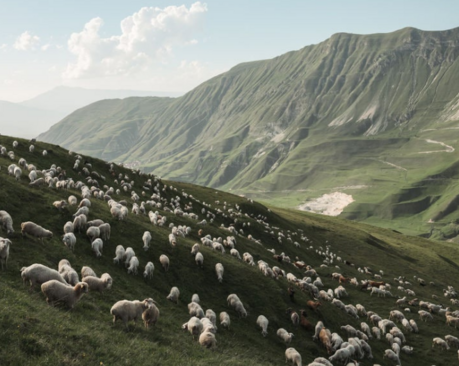
The Rifat Chadirji Prize 2026 has launched with a powerful mandate to address post-war recovery through landscape architecture in southern Lebanon's Sahl Al Khiam valley. This international competition invites architects, landscape architects, and urban planners worldwide to develop visionary proposals that restore both ecological systems and community livelihoods in a region devastated by occupation and recurrent bombardment. Organized by the Tamayouz Excellence Award, this year's theme, "The Right to Landscape," positions landscape-led interventions as essential tools for healing both land and people. The competition recognizes that landscapes are not merely scenic backdrops but fundamental resources for identity, economy, and environmental health in communities recovering from conflict.

Sahl Al Khiam represents a critical case study for post-war recovery, having served as an agricultural lifeline and refuge despite extensive damage. The valley remains vital to the Khiam community's survival, providing ecological continuity and spatial identity in a fractured region. Competition participants must address the core design question of how landscape recovery can balance nature conservation with economic regeneration while affirming local communities' rights to their land. Proposals should demonstrate strategic, sustainable interventions that protect long-term ecological integrity while creating immediate opportunities for residents to rebuild their lives and livelihoods. The challenge requires understanding complex layers of environmental, social, and political trauma while offering hopeful, practical solutions.

The design scope calls for comprehensive valley-scale visions supported by specific site interventions that show how broad strategies can be spatially realized. Participants may focus on three primary areas: Water Landscapes that manage seasonal flows and restore aquatic ecosystems, Productive Landscapes that revive agriculture and create sustainable economic opportunities, and Infrastructural Landscapes that provide essential services without damaging ecological systems. Successful proposals will integrate these categories, showing how water management supports agricultural productivity, how infrastructure can enhance rather than exploit natural systems, and how community governance can maintain restored landscapes over time. The competition encourages multidisciplinary collaboration to address these interconnected challenges comprehensively.

Registration opens with an early bird fee of $75 from December through February 2026, increasing to $90 for standard registration from March to June, and $110 for late registration in July until the July 30 deadline. Student-led teams can register for $50, supporting educational engagement with real-world problems, though students must provide valid identification and lead their teams. The competition welcomes individuals, teams of up to eight members, and established studios from any country, actively encouraging collaboration across disciplines and borders. Submissions are due July 31, 2026, giving participants approximately seven months to develop thoughtful, well-researched proposals that respect local conditions and community needs.

The prize structure offers substantial recognition and support for winners, with the first prize including $5,000, the Rifat Chadirji statuette, certificates, Tamayouz medals, and funded attendance at the award ceremony. Second prize provides $3,000 plus ceremony attendance, while third prize offers $2,000 with the same benefits. Up to seven honorable mentions will receive $500 each, and the top twenty entries will be published in the annual book and featured on the organization's website and social media platforms. These rewards aim to amplify impactful ideas and connect emerging talent with global audiences, ensuring that innovative recovery strategies receive the attention they deserve.

This competition represents more than an architectural exercise; it serves as a call to action for the design professions to engage with urgent humanitarian and environmental crises. By focusing on Sahl Al Khiam, the Rifat Chadirji Prize highlights how landscape architecture can address the right to land, resources, and spatial identity in post-conflict contexts. Participants have the opportunity to contribute meaningful ideas that could influence actual recovery efforts while advancing their own careers. The project demonstrates growing recognition that sustainable, just recovery requires designers who listen to communities, respect ecological limits, and imagine futures where both people and nature can thrive together after trauma.

WEEKLY HOTISSUE