


Professional photography educators often teach students about the importance of composition rules like the rule of thirds, leading lines, and the golden ratio. However, one instructor recently decided to conduct a personal experiment by deliberately ignoring every compositional guideline they had taught for over a decade. The goal was to discover whether these rules were truly essential for creating compelling images or if they had become creative crutches that limited artistic expression. The results challenged fundamental assumptions about what makes a photograph successful.
The experiment began during a week-long personal project where the photographer intentionally broke the rule of thirds with every shot, placing subjects dead center or at the extreme edges of the frame. They ignored leading lines, allowed horizons to cut through the middle of images, and disregarded the golden ratio completely. Symmetry was avoided when it would have been natural, and asymmetrical balance was ignored in favor of deliberate visual tension. The photographer also experimented with cluttered compositions, intentionally creating busy frames that traditional teaching would dismiss as chaotic or unfocused.
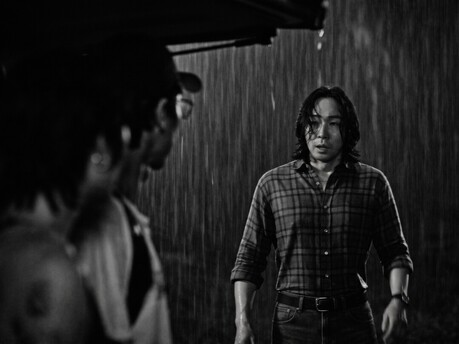
What emerged from this rule-breaking exercise was surprising. Many of the images possessed a raw, dynamic energy that more conventionally composed photographs lacked. By placing subjects in unconventional positions within the frame, the photographer created visual discomfort that forced viewers to spend more time examining each image. Some of the most successful shots featured extreme negative space that would typically be considered wasteful, yet this emptiness created powerful emotional resonance. The experiment revealed that so-called 'mistakes' in composition could serve as powerful storytelling tools when used intentionally.
The technical challenges were significant. Without compositional guidelines to rely on, the photographer had to develop a new intuitive sense of what worked visually. Autofocus systems, trained to favor rule-of-thirds intersection points, struggled with off-center subjects. The photographer had to manually focus more frequently and think more deliberately about depth of field to guide the viewer's eye. Post-processing also required different approaches, as standard cropping recommendations no longer applied. Each image demanded individual assessment without the usual benchmarks for success.
The most important lesson from this experiment was not that composition rules are worthless, but that they should be understood as tools rather than commandments. These guidelines developed over centuries of art history because they generally create pleasing, accessible images. However, truly creative photography sometimes requires breaking these conventions to convey unique perspectives or emotional states. The instructor now teaches students to master the rules first, then consciously decide when to break them for artistic effect. This approach transforms composition from a restrictive framework into a flexible language for visual expression, empowering photographers to develop their distinctive voices rather than simply replicating established formulas.