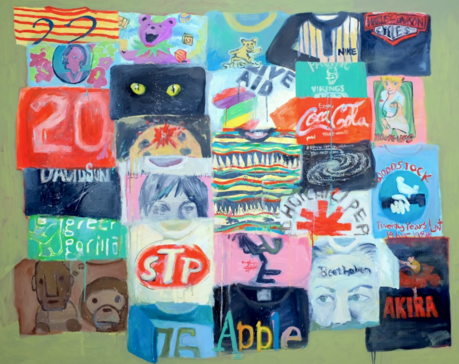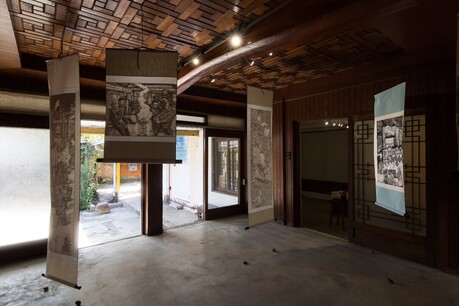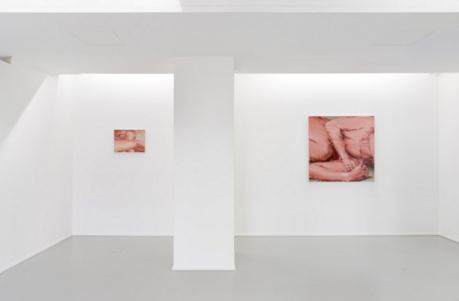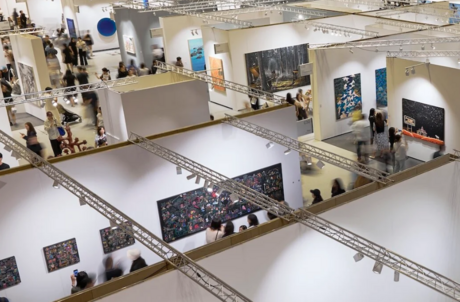



A provocative new solo exhibition by Rabeya Jalil at Canvas Gallery in Karachi is forcing visitors to question fundamental assumptions about sophistication, taste, and artistic value in contemporary Pakistani art. Titled "Lines and Language," the show ran from November 25 through December 4, 2025, and presented a body of work that actively interrogates how viewers read, misread, and internalize visual information. Through spirited yet thoughtful compositions, Jalil examines mark-making not merely as personal expression but as a systemic language that can be deliberately dismantled and reconstructed with new intention and meaning.
Jalil's dual identity as both artist and educator fundamentally shapes her creative approach. She currently serves as Head of Painting at the National College of Arts in Lahore, one of Pakistan's most prestigious art institutions, and co-founded the Journal of Art and Design Education Pakistan. Throughout her career, she has consistently advocated for broadening the scope of art discourse in her country, challenging narrow definitions of refinement and cultivated taste. This exhibition extends that mission by inviting a more democratic understanding of how visual languages operate and who gets to authorize their meaning. The curatorial statement explicitly notes that the show critiques the visual language system, identifying connections and challenging the binaries of the serious and the satirical, of high and low art, and of the values associated with cultivated and uncultivated taste.
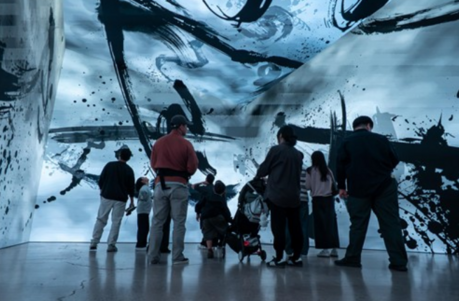
The exhibition space feels like an immersive landscape constructed entirely from marks, where Jalil's lines loop, hesitate, collide, and occasionally dissolve entirely. Her marks evoke chalkboards, children's drawings, proto-symbols, and modernist abstraction, creating an atmosphere reminiscent of a learning environment complete with responses, corrections, and erasures. In "Animal Play," creatures rendered in swift, restless strokes occupy a space between innocence and instinct, pulsating with raw energy. Conversely, "Fifty-Six Cousins" presents a grid of distorted faces that functions as a catalogue of fleeting emotions—each square serves as a quick study, imperfect yet deeply expressive, and collectively they form a fragmented community of human feeling.
Color provides another grammar in Jalil's visual language system, with bold fields, sharp contrasts, and assertive blocks of pigment guiding viewers across multiple layers of interpretation. Grids and repeated motifs establish a sense of order that is consistently disrupted by sudden gestural interruptions. "Lipsticks," a quieter but particularly striking work, operates like an archaeological surface documenting everyday gestures. Each tile carries an imprint of use and routine, while the title nudges viewers to consider femininity as a coded language constructed from repeated, ordinary actions that accumulate into larger meaning. Humor threads gently through the exhibition not as exaggeration but as subtle subversion—visual puns, sideways gestures, and moments of intentional awkwardness puncture the solemnity often associated with contemporary art.
These explorations echo impulses visible in Jalil's 2018 solo exhibition at Koel Gallery, where her work was described as infused with raw energy and a desire to move toward abstraction. That earlier show, featuring tense figures, fragmented anatomies, and nervy lines, revealed an artist already questioning conventional modes of representation. In "Lines and Language," those instincts have been refined into a more deliberate, layered inquiry that remains bold but is now anchored in clearer structural logic. Jalil approaches visual systems with affection but also with irreverence, reminding viewers that such systems, however authoritative, are human-made and always open to reinterpretation.
Ultimately, the exhibition is deeply concerned with processes of learning and unlearning. The works often feel like pages from an unruly workbook where lessons slip beyond boundaries and connections form unexpectedly. Viewers are encouraged to participate actively, to complete the thought, and to reconsider what qualifies as artistic, refined, or meaningful. By repositioning the line as gesture, boundary, idea, and tool of inquiry, Jalil reclaims mark-making from rigid hierarchies. This timely and thoughtful exhibition establishes her as one of Pakistan's most inquisitive artist-educators, someone who is not content to simply produce art but is committed to expanding the very framework through which her society understands and values creative expression.