
Sayart.net - Global Photography Scene Features Landmark Exhibitions and Emerging Voices

  • December 31, 2025 (Wed)

Global Photography Scene Features Landmark Exhibitions and Emerging Voices

Sayart / Published December 31, 2025 02:29 AM
  • -
  • +
  • print

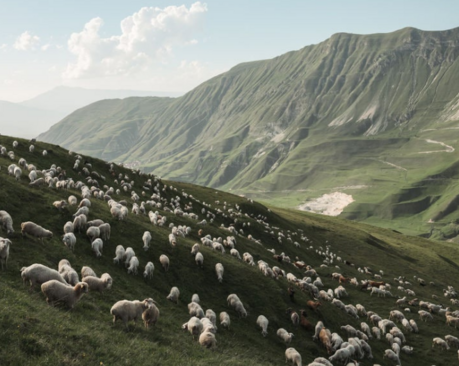
The international photography world is currently showcasing an extraordinary range of exhibitions that span continents and explore diverse themes, from cultural landscapes to intimate personal narratives. New York City hosts the inaugural exhibition of the World Food Photography Awards at Empire Stores in Brooklyn, marking the first time these celebrated images have been displayed publicly. Meanwhile, the Maison Européenne de la Photographie in Paris presents Sarah van Rij's evolutionary journey from street photography to collage, demonstrating the medium's versatility. Across the Atlantic, Mexico City's National Museum of World Cultures features Philippe Paquet's documentation of Mongolia, bridging distant cultures through visual storytelling. These simultaneous exhibitions highlight photography's unique capacity to connect global audiences through both universal human experiences and specific cultural perspectives.

The legacy of humanist photography receives renewed attention through a significant exhibition at the Keith de Lellis Gallery, which brings together iconic and lesser-known works by masters including Henri Cartier-Bresson, Robert Doisneau, Willy Ronis, Édouard Boubat, and Sabine Weiss. This curated collection emphasizes the spontaneous, poetic moments that defined mid-twentieth century street photography and continue to influence contemporary practitioners. The exhibition reveals how these photographers captured the essence of daily life with empathy and artistic precision, creating images that transcend their historical contexts to remain relevant today. By showcasing both famous and overlooked photographs, the gallery provides a more comprehensive understanding of the humanist movement's impact on visual culture. This historical retrospective serves as a foundation for appreciating how modern photographers build upon these traditions while addressing contemporary concerns.

Several contemporary photographers are pushing boundaries by exploring themes of identity, performance, and the relationship between humans and nature. Naima Green's exhibition "Instead, I Spin Fantasies" at the International Center of Photography addresses pregnancy through staged self-portraits that blur documentary and performance art. Her work expresses both personal and social identity using fragmentary, fictional approaches to challenge conventional narratives. Similarly, Sarah van Rij's presentation at the Maison Européenne de la Photographie traces her development from candid street photography to constructed still lifes and self-portraits, ultimately incorporating collage techniques. This evolution reflects broader trends in contemporary photography where artists increasingly question the medium's truth-telling conventions while expanding its expressive possibilities.

Environmental consciousness and social critique emerge powerfully in recent photographic projects that challenge viewers to reconsider their relationship with the natural world. Douce d'Ivry's exhibition at the Hoang Belli Gallery features intimate portraits of insects and small creatures interacting directly with human skin, creating visual dialogues that transform perceived repulsion into tenderness. Her work highlights the vital ecological functions these often-invisible species perform, from pollination to decomposition. Lúa Ribeira's book "Agony in the Garden," published by Dalpine, examines global socio-political issues through dystopian and sometimes absurd imagery that places modern symbols like Nike trainers within biblical desert landscapes. This approach creates visceral uncertainty while critiquing contemporary consumer culture through ancient narrative frameworks.

The photography book market continues to thrive with publications that explore conceptual approaches to the medium. Riccardo Fregoso's "Winter Light," published by Setanta Books, compiles seven years of research into photographic magical realism, transforming ordinary scenes into transcendent visual experiences. Stephan Vanfleteren's "Transcripts of a Sea," available through Hannibal Books and exhibited at MSK Gand, examines the dual relationship coastal communities maintain with water as both playground and livelihood. These publications demonstrate how the book format allows photographers to develop complex, long-form narratives that extend beyond single images. Additionally, the photography community recently mourned the loss of choreographer Hans van Manen, whose visual documentation of dance exemplified how photographic sequences can capture movement's essence and emotional depth.

These diverse exhibitions and publications collectively demonstrate photography's continued evolution as both an art form and a tool for social commentary. From Lee Friedlander's comprehensive documentation of American Christmas traditions to emerging artists redefining documentary ethics, the medium proves its adaptability to changing cultural contexts. The geographic spread of these shows, from New York to Paris to Mexico City to Malmö, underscores photography's universal language while celebrating its local specificities. As institutions like the International Center of Photography and Maison Européenne de la Photographie continue supporting both established and emerging voices, the medium's future appears vibrant and socially engaged.

The international photography world is currently showcasing an extraordinary range of exhibitions that span continents and explore diverse themes, from cultural landscapes to intimate personal narratives. New York City hosts the inaugural exhibition of the World Food Photography Awards at Empire Stores in Brooklyn, marking the first time these celebrated images have been displayed publicly. Meanwhile, the Maison Européenne de la Photographie in Paris presents Sarah van Rij's evolutionary journey from street photography to collage, demonstrating the medium's versatility. Across the Atlantic, Mexico City's National Museum of World Cultures features Philippe Paquet's documentation of Mongolia, bridging distant cultures through visual storytelling. These simultaneous exhibitions highlight photography's unique capacity to connect global audiences through both universal human experiences and specific cultural perspectives.

The legacy of humanist photography receives renewed attention through a significant exhibition at the Keith de Lellis Gallery, which brings together iconic and lesser-known works by masters including Henri Cartier-Bresson, Robert Doisneau, Willy Ronis, Édouard Boubat, and Sabine Weiss. This curated collection emphasizes the spontaneous, poetic moments that defined mid-twentieth century street photography and continue to influence contemporary practitioners. The exhibition reveals how these photographers captured the essence of daily life with empathy and artistic precision, creating images that transcend their historical contexts to remain relevant today. By showcasing both famous and overlooked photographs, the gallery provides a more comprehensive understanding of the humanist movement's impact on visual culture. This historical retrospective serves as a foundation for appreciating how modern photographers build upon these traditions while addressing contemporary concerns.

Several contemporary photographers are pushing boundaries by exploring themes of identity, performance, and the relationship between humans and nature. Naima Green's exhibition "Instead, I Spin Fantasies" at the International Center of Photography addresses pregnancy through staged self-portraits that blur documentary and performance art. Her work expresses both personal and social identity using fragmentary, fictional approaches to challenge conventional narratives. Similarly, Sarah van Rij's presentation at the Maison Européenne de la Photographie traces her development from candid street photography to constructed still lifes and self-portraits, ultimately incorporating collage techniques. This evolution reflects broader trends in contemporary photography where artists increasingly question the medium's truth-telling conventions while expanding its expressive possibilities.

Environmental consciousness and social critique emerge powerfully in recent photographic projects that challenge viewers to reconsider their relationship with the natural world. Douce d'Ivry's exhibition at the Hoang Belli Gallery features intimate portraits of insects and small creatures interacting directly with human skin, creating visual dialogues that transform perceived repulsion into tenderness. Her work highlights the vital ecological functions these often-invisible species perform, from pollination to decomposition. Lúa Ribeira's book "Agony in the Garden," published by Dalpine, examines global socio-political issues through dystopian and sometimes absurd imagery that places modern symbols like Nike trainers within biblical desert landscapes. This approach creates visceral uncertainty while critiquing contemporary consumer culture through ancient narrative frameworks.

The photography book market continues to thrive with publications that explore conceptual approaches to the medium. Riccardo Fregoso's "Winter Light," published by Setanta Books, compiles seven years of research into photographic magical realism, transforming ordinary scenes into transcendent visual experiences. Stephan Vanfleteren's "Transcripts of a Sea," available through Hannibal Books and exhibited at MSK Gand, examines the dual relationship coastal communities maintain with water as both playground and livelihood. These publications demonstrate how the book format allows photographers to develop complex, long-form narratives that extend beyond single images. Additionally, the photography community recently mourned the loss of choreographer Hans van Manen, whose visual documentation of dance exemplified how photographic sequences can capture movement's essence and emotional depth.

These diverse exhibitions and publications collectively demonstrate photography's continued evolution as both an art form and a tool for social commentary. From Lee Friedlander's comprehensive documentation of American Christmas traditions to emerging artists redefining documentary ethics, the medium proves its adaptability to changing cultural contexts. The geographic spread of these shows, from New York to Paris to Mexico City to Malmö, underscores photography's universal language while celebrating its local specificities. As institutions like the International Center of Photography and Maison Européenne de la Photographie continue supporting both established and emerging voices, the medium's future appears vibrant and socially engaged.

WEEKLY HOTISSUE