
Sayart.net - Alberto Giacometti′s Powerful War Sculptures Continue to Resonate in Contemporary Times

  • January 08, 2026 (Thu)

Alberto Giacometti's Powerful War Sculptures Continue to Resonate in Contemporary Times

Sayart / Published January 5, 2026 09:19 PM
  • -
  • +
  • print

The haunting sculptures of Swiss artist Alberto Giacometti, created in response to the devastation of war, maintain their profound emotional power and relevance in today's conflict-ridden world. Giacometti's artistic vision, shaped by his experiences during World War II and its aftermath, produced a body of work that captures the existential anxiety and human fragility that war inflicts upon individuals and societies. These slender, elongated figures, which have become iconic in modern art, speak to contemporary audiences grappling with ongoing global conflicts and the enduring trauma of violence.

Born in 1901 in the Italian-speaking region of Switzerland, Giacometti witnessed the rise of fascism and the horrors of World War II from his studio in Paris, where he remained during the German occupation. His wartime experience fundamentally transformed his artistic approach, leading him to abandon earlier surrealist influences in favor of a more direct, visceral representation of the human condition. The material shortages during and after the war forced him to work with limited resources, contributing to the distinctive emaciated forms that would define his mature style. His figures became increasingly thin and isolated, embodying the psychological and physical devastation he observed around him.

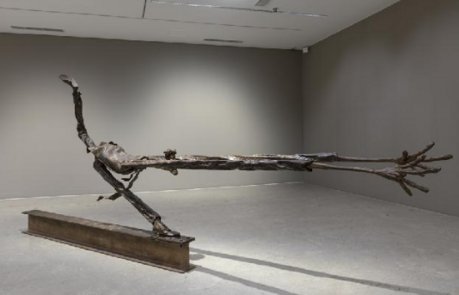
Among his most powerful war-related works are "The Walking Man," "Pointing Man," and "City Square," which depict solitary figures navigating empty spaces, suggesting the alienation and displacement experienced by war survivors. These sculptures, with their rough, textured surfaces and attenuated limbs, convey a sense of vulnerability and resilience simultaneously. Giacometti's 1947 sculpture "Man Pointing" has become particularly emblematic, its gesturing figure seeming to accuse or warn, perhaps representing the artist's own response to the atrocities he witnessed. The figures appear to be both present and disappearing, capturing the fragility of existence in an age of mass destruction.

The artist's technique involved repeatedly building up and scraping away plaster, creating surfaces that seem eroded by time and trauma, much like the human spirit under the pressures of war. This obsessive process reflected his struggle to capture the essence of human existence, resulting in figures that appear both universal and deeply personal. The stark, monochromatic presentation of most of his sculptures—typically cast in bronze or rendered in plaster—enhances their ghostly, memorial quality, suggesting the spectral presence of those lost to conflict. Art historians note that his work bridges the gap between existentialist philosophy and visual art, making abstract concepts of alienation and anxiety tangible and visible.

Critical reception of Giacometti's war-influenced work has evolved over the decades, with contemporary scholars emphasizing its continued relevance in addressing modern conflicts. Unlike traditional war memorials that glorify heroism or sacrifice, Giacometti's sculptures focus on the individual's internal experience of violence and loss. This approach resonates with current discussions about trauma, PTSD, and the long-term psychological effects of war on both soldiers and civilians. Museums and galleries worldwide continue to exhibit his work, often juxtaposing it with contemporary art addressing similar themes, creating dialogues across generations about the human cost of conflict.

The enduring power of Giacometti's war visions lies in their ability to transcend specific historical circumstances while remaining rooted in the universal human experience of suffering and survival. As new conflicts emerge and old wounds persist, his emaciated figures serve as silent witnesses to humanity's capacity for both destruction and perseverance. For modern viewers, these sculptures offer a space for reflection on the ongoing violence in Ukraine, the Middle East, and other regions, proving that art can provide a language for processing trauma when words fail. Giacometti's legacy reminds us that the true cost of war is measured not in territory or political gain, but in the diminished, yet enduring, human spirit that his art so powerfully captures.

The haunting sculptures of Swiss artist Alberto Giacometti, created in response to the devastation of war, maintain their profound emotional power and relevance in today's conflict-ridden world. Giacometti's artistic vision, shaped by his experiences during World War II and its aftermath, produced a body of work that captures the existential anxiety and human fragility that war inflicts upon individuals and societies. These slender, elongated figures, which have become iconic in modern art, speak to contemporary audiences grappling with ongoing global conflicts and the enduring trauma of violence.

Born in 1901 in the Italian-speaking region of Switzerland, Giacometti witnessed the rise of fascism and the horrors of World War II from his studio in Paris, where he remained during the German occupation. His wartime experience fundamentally transformed his artistic approach, leading him to abandon earlier surrealist influences in favor of a more direct, visceral representation of the human condition. The material shortages during and after the war forced him to work with limited resources, contributing to the distinctive emaciated forms that would define his mature style. His figures became increasingly thin and isolated, embodying the psychological and physical devastation he observed around him.

Among his most powerful war-related works are "The Walking Man," "Pointing Man," and "City Square," which depict solitary figures navigating empty spaces, suggesting the alienation and displacement experienced by war survivors. These sculptures, with their rough, textured surfaces and attenuated limbs, convey a sense of vulnerability and resilience simultaneously. Giacometti's 1947 sculpture "Man Pointing" has become particularly emblematic, its gesturing figure seeming to accuse or warn, perhaps representing the artist's own response to the atrocities he witnessed. The figures appear to be both present and disappearing, capturing the fragility of existence in an age of mass destruction.

The artist's technique involved repeatedly building up and scraping away plaster, creating surfaces that seem eroded by time and trauma, much like the human spirit under the pressures of war. This obsessive process reflected his struggle to capture the essence of human existence, resulting in figures that appear both universal and deeply personal. The stark, monochromatic presentation of most of his sculptures—typically cast in bronze or rendered in plaster—enhances their ghostly, memorial quality, suggesting the spectral presence of those lost to conflict. Art historians note that his work bridges the gap between existentialist philosophy and visual art, making abstract concepts of alienation and anxiety tangible and visible.

Critical reception of Giacometti's war-influenced work has evolved over the decades, with contemporary scholars emphasizing its continued relevance in addressing modern conflicts. Unlike traditional war memorials that glorify heroism or sacrifice, Giacometti's sculptures focus on the individual's internal experience of violence and loss. This approach resonates with current discussions about trauma, PTSD, and the long-term psychological effects of war on both soldiers and civilians. Museums and galleries worldwide continue to exhibit his work, often juxtaposing it with contemporary art addressing similar themes, creating dialogues across generations about the human cost of conflict.

The enduring power of Giacometti's war visions lies in their ability to transcend specific historical circumstances while remaining rooted in the universal human experience of suffering and survival. As new conflicts emerge and old wounds persist, his emaciated figures serve as silent witnesses to humanity's capacity for both destruction and perseverance. For modern viewers, these sculptures offer a space for reflection on the ongoing violence in Ukraine, the Middle East, and other regions, proving that art can provide a language for processing trauma when words fail. Giacometti's legacy reminds us that the true cost of war is measured not in territory or political gain, but in the diminished, yet enduring, human spirit that his art so powerfully captures.
WEEKLY HOTISSUE