


Contemporary artist Victoria Zalatoris has gained international recognition for her ambitious series of installations titled "Stairway to Heaven," which transform ordinary staircases into transcendent experiences of light, space, and perception. Her work reimagines vertical architecture as a canvas for exploring themes of ascension, spirituality, and the human desire to transcend physical limitations. Through carefully orchestrated combinations of LED lighting, glass panels, mirrors, and interactive technology, Zalatoris creates the illusion of infinite pathways that seem to extend beyond the physical constraints of the building. Each installation responds to the specific architectural context in which it is placed, whether in public museums, corporate atriums, or private commissions, making every iteration a unique meditation on the relationship between movement and enlightenment. The artist's background in both sculpture and theatrical design informs her sophisticated understanding of how lighting and spatial arrangement can manipulate perception and evoke emotional responses. Zalatoris developed the Stairway to Heaven concept after observing how people interact with staircases in their daily lives, often treating them as purely functional elements rather than opportunities for contemplation. Her installations typically feature programmable LED strips that create gradients of color suggesting dawn, daylight, and twilight, while strategically placed mirrors generate recursive reflections that make the space appear to extend infinitely upward. The interplay between physical architecture and illusionistic effects challenges visitors to question their own senses and consider how environment shapes consciousness. Many installations incorporate motion sensors that trigger changes in lighting patterns as people ascend or descend, making each individual's journey through the space a unique, personalized experience. The work has been exhibited in major cultural institutions across the United States and Europe, where it consistently draws long lines of visitors eager to photograph and experience the immersive environment. Critics have praised Zalatoris for her ability to transform mundane architectural necessities into profound artistic statements that resonate with diverse audiences. Art historians contextualize her work within the legacy of light artists like James Turrell and Olafur Eliasson, while noting her distinctive focus on vertical movement and spiritual metaphor. The installations have become particularly popular on social media platforms, where photographs capture the ethereal quality of the illuminated staircases, though Zalatoris emphasizes that the true experience cannot be captured in two dimensions. Beyond their aesthetic appeal, the Stairway to Heaven installations raise important questions about how contemporary art can intervene in public spaces to create moments of beauty and reflection in otherwise utilitarian environments. Zalatoris collaborates closely with architects, engineers, and lighting technicians to ensure that her artistic vision integrates seamlessly with building codes and safety requirements, demonstrating that functional infrastructure and high art need not be mutually exclusive. The projects often require months of planning and installation, as each element must be precisely calibrated to achieve the desired optical effects while maintaining structural integrity. Her work has inspired a new generation of artists to consider how everyday spaces can be re-enchanted through thoughtful artistic intervention. As Zalatoris continues to develop new variations on the Stairway to Heaven theme, she explores emerging technologies such as augmented reality and responsive sound design to deepen the immersive quality of her installations. Future projects include a major commission for a new performing arts center and a traveling version that can adapt to temporary exhibition spaces. The artist remains committed to her core mission of elevating the human spirit through transformative spatial experiences, one step at a time.
Latest article
- ‘Shades of Ink’ Brings Stories of Nonsan to Seoul
- Jang Hyejin Finds the Unfamiliar in Everyday Scenes
- ILLIT’s ‘Magnetic’ Surpasses 900 Million Spotify Streams
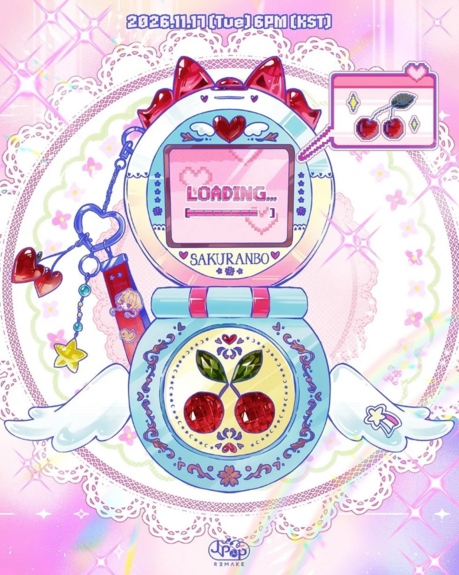
- YENA to Release Korean-Language Remake of Ai Otsuka’s ‘Sakuranbo’
- National Dance Festival Enters Final Week Across Seoul
- King Kanna Examines the Boundaries of the ‘Normal’ Body
- PS Sarubia Opens ‘Studio Project 3’ With Dobin Kim and Setbyul Li
- Luke Park Revisits Natural Forms in ‘Ventilation’