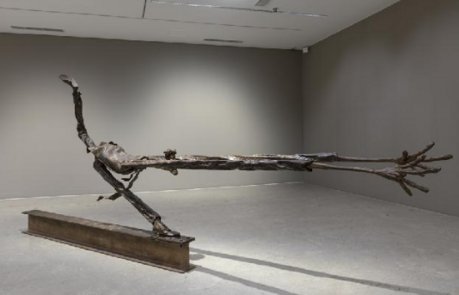



Chinese-born sculptor Jiannan Wu creates intricate three-dimensional works that transform pop culture icons and collective memories into theatrical sculptural narratives. The artist, who divides his time between his hometown of Dalian, China, and New York City where he teaches at the New York Academy of Art, explores the liminal space between public spectacle and private experience. His sculptures and bas-reliefs function as compressed stage sets, using shallow space and forced perspective to examine how contemporary life blurs the boundaries between spectator and performer. Wu's work has gained international attention for its ability to find universal themes in both global events and intimate domestic moments, making complex cultural commentary accessible through familiar imagery.
At the core of Wu's artistic practice is an investigation into the tension between the public world and private life, particularly how media and collective memory transform reality into spectacle. His pieces address themes of failure, desire, and fate while inviting viewers to reconsider familiar images—politicians, medical masks, sports figures—with renewed empathy and cultural perspective. Rather than delivering satirical commentary, Wu creates what he calls 'bizarro fairytales' that heighten the inherent kitsch of pop culture while probing deeper psychological truths. The artist is particularly interested in how images shape our understanding of reality, questioning whether the experiences of someone on a global platform fundamentally differ from those of someone living locally, and finding unexpected connections between these seemingly disparate worlds.
Wu builds his scenes primarily through figurative sculpture and wall-mounted bas-relief, employing cinematographic techniques to create dramatic spatial compression. After establishing a strong frontal composition, he determines how many spatial layers each relief requires and where perspectives can heighten emotional impact. The artist uses digital mock-ups and 3D prints to test proportions and depths before developing the detailed figures, gestures, and facial expressions that carry the psychology of each scene. His finishing process resembles cinematography, utilizing paint, material contrast, and occasionally embedded LEDs to control mood, focus, and rhythm. This approach creates a deliberate tension between highly realistic modeling and slightly exaggerated theatrical details that draw viewers into his constructed worlds.
Wu populates his sculptural narratives with a carousel of characters drawn from mainstream entertainment and current events, ranging from Woody of Toy Story to Gandalf from The Lord of the Rings. He transforms mundane collective memories—such as lockdown procedures—into ferris wheels and compresses stadium events into intimate reliefs. Works like 'Wonder Wheel,' 'Stadium,' and 'Destiny Is All' demonstrate his ability to recontextualize familiar imagery within dreamlike compositions. The artist juxtaposes public figures like politicians, footballers, and military personnel with autobiographical scenes of family dinners and men asleep on sofas, creating dense compositions that collapse personal and collective experience into shared visual space.
For Wu, sculpture serves as a method to slow down experience and transform fleeting emotions into physical, shareable objects that invite contemplation. He treats each piece as an opportunity to examine how people perform, collide, and search for meaning within what he calls 'the theatre of contemporary life.' The artist's liminal existence between China and America informs his perspective on cultural universality and difference, allowing him to navigate multiple cultural contexts. Even when his subject matter originates from specific events, he aims for universal resonance that transcends geographical and cultural boundaries. His work ultimately asks viewers to look beyond surface-level humor to find underlying discomfort and ambiguity, creating art that is simultaneously accessible and profoundly unsettling in its revelations about modern existence.