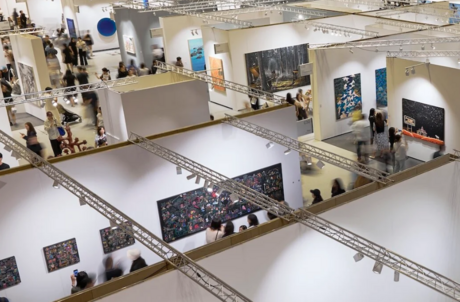



The Bonnat-Helleu Museum in Bayonne, France, known as the "little Louvre of Bayonne," has finally reopened its doors to the public after a remarkable 14-year closure. The museum welcomed visitors on Thursday, November 27, following an inauguration ceremony attended by French Culture Minister Rachida Dati. The reopening marks the completion of an extensive €30 million renovation project that completely transformed one of France's most treasure-rich yet paradoxically unknown art collections.
The museum's lengthy closure began in 2011 due to the risk of collapse of the glass roof in its central patio. What followed was a challenging renovation journey plagued by numerous setbacks that extended the project far beyond its original timeline. Despite these obstacles, the museum has emerged completely renovated and expanded, ready to showcase one of France's richest and highest-quality public art collections to a new generation of visitors.
Housed in a Belle Époque building constructed in 1896 by architect Charles Planckaert, the museum was originally established in the early 1900s to accommodate an extraordinary donation. The collection began with a generous gift made in 1891 by Léon Bonnat (1833-1922), a Bayonne-born academic painter and collector. Upon Bonnat's death, another substantial bequest was added to the original donation, bringing the total to 3,000 works officially given to the Louvre with the obligation of permanent deposit at the Bayonne museum. This arrangement makes it the largest ensemble of Louvre deposits in France.
The museum's crown jewel is the freshly restored "Bather, Half-Length" by Jean-Auguste-Dominique Ingres, often referred to as the Bayonne museum's "Mona Lisa." This masterpiece, created in 1807, is one of Ingres' three "academy submissions" completed at Villa Medici (the French Academy in Rome), alongside "The Valpinçon Bather" and "Oedipus and the Sphinx," which are housed at the Louvre. The painting has been given a place of honor in the museum's new layout following its careful restoration.
The collection, described by Pierre Rosenberg as "the most beautiful between Paris and Madrid," encompasses 7,000 paintings, sculptures, and drawings spanning from the Middle Ages to the 19th century. For the reopening, 1,300 pieces underwent restoration, with approximately 1,000 works now displayed through a chronological-thematic route featuring airy spaces and colorful wall displays. Among the numerous masterpieces are Ingres' "Virgin with the Host" (1866), an enchanting "Cleopatra" by Domenico Beccafumi (circa 1508), and a superb painted portrait by El Greco (1576-1578).
The museum also boasts works by several Rubens, pieces by Léon Bonnat and Paul Helleu (bequeathed by Helleu's daughter to the City of Bayonne in 2009), as well as beautiful paintings by Simon Vouet, Francisco de Goya, Théodore Géricault, John Constable, Armand Guillaumin, Maurice Denis, and Joaquín Sorolla. Additionally, the museum houses an exceptional graphic arts cabinet, ranking among the world's 30 most important collections, featuring drawings by Michelangelo, Raphael, Titian, Parmigianino, the Tiepolos, Leonardo da Vinci, Nicolas Poussin, Antoine Watteau, Pierre-Paul Prud'hon, Jean-Baptiste Greuze, Jacques-Louis David, Eugène Delacroix, Ingres, and Géricault, along with engravings by Rembrandt.
The renovation was carried out by BLP & Associates, a Bordeaux-based architectural firm that previously rejuvenated the Musée de l'Orangerie in Paris during the 2000s. The project extended the museum to include the neighboring building, a 1930s structure that previously housed a school. This additional space now accommodates staff offices, storage areas, and research rooms. The museum features a new reception hall located at the junction between the former school courtyard and the museum's historic patio, along with a modern glass extension housing an elevator and visitor rest areas.
Inside, the original volumes of the building, which had been obscured by previous renovations, have been restored to create more fluid circulation and doubled surface area. The museum now spans 7,000 square meters, with 2,500 square meters dedicated to the permanent collection route and 450 square meters for temporary exhibitions. The historic patio now displays the "Bayonne Triptych" by Henri-Achille Zo, depicting Bonnat and his Basque and Béarnais students.
The project's extended timeline earned it a reputation as "cursed" due to a succession of unfortunate events. Challenges included a change in municipal leadership, opposition from local parents to the annexation of the neighboring school, archaeological excavations that revealed the presence of an ancient cemetery on the site, construction halts during COVID-19, and soaring material costs. These setbacks transformed what should have been a much shorter renovation into a 14-year odyssey.
Throughout the closure, the museum saw several leadership changes. Initially directed by Sophie Harent, then by Benjamin Couilleaux (who, during the closure from 2018 to 2022, made several acquisitions including a superb painting by Nicoló Bambini), the museum has been under the leadership of young art historian Barthélémy Etchegoyen Glama since February 2025. The 32-year-old, a former École normale supérieure student from the Basque Country, previously served as advisor to Louvre president Laurence des Cars and taught art history and archaeology at Columbia University in New York. His appointment brings fresh blood to this long-awaited renaissance.
The Bonnat-Helleu Museum is located at 5 Rue Jacques Laffitte, 64100 Bayonne, and represents a significant cultural milestone for the region. After 14 years of patience, art lovers can once again discover this remarkable collection that rightfully earned its nickname as the "little Louvre of Bayonne."