
Sayart.net - Top Ten Art Exhibitions and Publications of 2025: A Comprehensive Review

  • December 05, 2025 (Fri)

Top Ten Art Exhibitions and Publications of 2025: A Comprehensive Review

Sayart / Published December 2, 2025 05:21 PM
  • -
  • +
  • print

The contemporary art world witnessed remarkable exhibitions and publications throughout 2025, reflecting on themes ranging from democracy and fascism to environmental concerns and cultural identity. This year's standout presentations challenged conventional narratives while addressing urgent global issues through diverse artistic perspectives.

Leading the list is "We, the People: 30 Years of Democracy in South Africa" at the Norval Foundation in Cape Town, curated by Liese van der Watt. This groundbreaking exhibition acknowledges that democracies are neither guaranteed nor permanent fixtures, but rather fragile systems requiring constant nurturing and creation. Since Nelson Mandela's election as president in South Africa's first free elections in 1994, the nation has experienced three decades of conflict-ridden yet vibrant democratic development, leaving distinct traces in contemporary art. The featured works resist simplified unity narratives, instead reflecting on a diverse structural foundation that begins with "We, the People."

Another significant contribution comes from Dagmar Herzog's book "The New Fascist Body" published by Wirklichkeit Books. Herzog demonstrates how fascism operates primarily through body politics, including the systematic production of rejected or surplus bodies marked for destruction. While fascist regimes have traditionally promised followers the satisfaction of unbridled violence in everyday acts, Herzog argues that contemporary fascisms have dispensed with the mass spectacles of historical fascist regimes without losing their influence. Her analysis of Germany's far-right AfD party reveals how obsessive ideas against people with disabilities operate with the same effectiveness as previous anti-Semitic and chauvinist motives, exposing the secret message of the new right: not merely to oppress, but to behave uninhibitedly with complete impunity.

The art world also celebrated historical treasures with "Les Très riches heures du Duc de Berry" at Château de Chantilly, France, curated by Mathieu Deldicque and Marie-Pierre Dion. This unprecedented exhibition showcased six unbound double-page folios from the Duke of Berry's book of hours, made possible by the manuscript's recently completed restoration and the availability of climate-controlled display cases. Considered one of the most important illustrated manuscripts from the fifteenth century, "Les très riches heures" serves not only as testimony to religious references of the time but also as a document of everyday life. The paintings, rendered in intense and fantastic colors, suggest a distinctly different relationship between humans and animals, exemplified by portrayals of shepherds tending droves of pigs in forest settings.

Wolfgang Tillmans delivered a masterful presentation at the Centre Pompidou in Paris with "Nothing Could Have Prepared Us Everything Could Have Prepared Us," curated by Florian Ebner. This exhibition represents a masterpiece of consistency, seamlessly combining the Pompidou's architecture with Tillmans' work spanning four decades. His fascination with elementary experiences—observing the sea's presence or hearing the deep bass of early Detroit techno—finds expression through photographs, video, and sound installations. The exhibition serves as a powerful plea for the courage to experience things firsthand, creating a thoroughly political statement for sensory liberation from what Tillmans sees as the terrifying power of false feelings perpetuated by tech corporations.

Environmental concerns took center stage at the "Bienal das Amazônias: Verde-Distância" in Belém, Brazil, curated by Manuela Moscoso with Sara Garzón, Jean da Silva, and Mónica Amieva. Moscoso titled the Second Bienal das Amazônias "Distance-Green" after a phrase from Benedicto Monteiro's 1972 novel "Verde vagomundo," completing what appears to be an endless chain of green variations produced by the vast Amazon rainforest, which can only be truly appreciated from a distance. The exhibition conjured a forest that has evoked logics of occupation, control, and labeling since early colonizers arrived. Today, however, early botanists have been replaced by loggers and prospectors seeking gold and oil with no genuine interest in the forest itself. Rather than seeking solutions in the fight for the Amazon, the biennial traced marks left by occupations on forest inhabitants and their paths from the green into the wider world, extending well beyond the Amazon and greater Caribbean.

Berlin's art scene was enriched by Christelle Oyiri's exhibition at LAS Art Foundation, curated by Sam Ozer. In her exhibition "Dead God Flow," Oyiri explored the concept that death is not an ending but a loop—"a broken god's beat still pulsing." This intuitive core manifested through the video work "Hyperfate" (2022) and the specially created film "Hauntology of an OG," co-produced with photographer Neva Wireko. The latter film recapitulates a journey through Memphis, where rapper and poet Darius Phatmak Clayton reflects on subjectivity and space through an inventory of names, memories, struggles, losses, and resistances in this historically overdetermined location.

The twelfth edition of SITE Santa Fe International, titled "Once Within a Time" and curated by Cecilia Alemani, exemplified storytelling traditions through contemporary art. Helen Cordero's sculpture "Storyteller" (circa 1972) embodied the intuition and program of the newly relaunched biennial. In the 1960s, Cordero, who grew up in New Mexico's Cochiti Pueblo, began creating small sculptures of people with closed eyes and open mouths, inspired by her preoccupation with her grandparents' lives, which she learned about primarily through their stories. These aesthetic narratives of experiential history run throughout the Santa Fe exhibition, which remains on view through January 12, 2026.

Paris continued its cultural prominence with "Paris Noir" at the Centre Pompidou, curated by Alicia Knock. This ambitious exhibition brought together 150 artists from Africa, the Caribbean, and the Americas who have rarely been exhibited in France. The result draws comparisons to Paul Gilroy's masterpiece 1993 book "The Black Atlantic: Modernity and Double Consciousness." Just as Gilroy empirically removes essentialism from discussions of musical productions—from blues to reggae to hip-hop—to make room for hybridization, this exhibition revealed the syncretic origins, experiences, and styles that coalesced into powerful works of visual art.

Canada's cultural landscape was highlighted through "The Potlatch Collection" at the Umista Cultural Center in Alert Bay. In the Kwakwākāwakw language, "Umista" means the return of something significant. Within the context of the Umista Cultural Center, founded in 1980, this term refers to the return of masks and dance regalia repatriated after the potlatch ban (1885-1951). Repatriation agreements from museums and private collections worldwide stipulated that objects be housed in suitable museum facilities, compelling the Indigenous community to rethink Western museum concepts and develop alternative display forms. Arranged in sequences reminiscent of potlatch ceremonies, masks and regalia are not frozen as auratic objects but carry the energy of their ceremonial use, ready to be experienced by visitors.

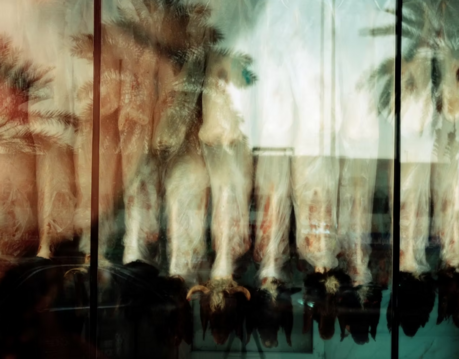
The year's selections concluded with "Why Look at Animals?" at the National Museum of Contemporary Art Athens, curated by Katerina Gregos. Based on John Berger's groundbreaking 1980 essay of the same name, this exhibition explores the legal status of nonhumans through a diverse spectrum of works. These range from Marcus Coates' investigations into similarities between vocalizations of unrelated animal species to Sammy Baloji's "Hunting – Collecting" (2015), a photograph series depicting hunters with their animal prey. The hunters' radiant joy over their victims' dead bodies encapsulates what Gregos describes as the libidinal force still politely termed "lust for violence." The exhibition remains on view through February 15, 2026, continuing important conversations about human-animal relationships in contemporary society.


The contemporary art world witnessed remarkable exhibitions and publications throughout 2025, reflecting on themes ranging from democracy and fascism to environmental concerns and cultural identity. This year's standout presentations challenged conventional narratives while addressing urgent global issues through diverse artistic perspectives.

Leading the list is "We, the People: 30 Years of Democracy in South Africa" at the Norval Foundation in Cape Town, curated by Liese van der Watt. This groundbreaking exhibition acknowledges that democracies are neither guaranteed nor permanent fixtures, but rather fragile systems requiring constant nurturing and creation. Since Nelson Mandela's election as president in South Africa's first free elections in 1994, the nation has experienced three decades of conflict-ridden yet vibrant democratic development, leaving distinct traces in contemporary art. The featured works resist simplified unity narratives, instead reflecting on a diverse structural foundation that begins with "We, the People."

Another significant contribution comes from Dagmar Herzog's book "The New Fascist Body" published by Wirklichkeit Books. Herzog demonstrates how fascism operates primarily through body politics, including the systematic production of rejected or surplus bodies marked for destruction. While fascist regimes have traditionally promised followers the satisfaction of unbridled violence in everyday acts, Herzog argues that contemporary fascisms have dispensed with the mass spectacles of historical fascist regimes without losing their influence. Her analysis of Germany's far-right AfD party reveals how obsessive ideas against people with disabilities operate with the same effectiveness as previous anti-Semitic and chauvinist motives, exposing the secret message of the new right: not merely to oppress, but to behave uninhibitedly with complete impunity.

The art world also celebrated historical treasures with "Les Très riches heures du Duc de Berry" at Château de Chantilly, France, curated by Mathieu Deldicque and Marie-Pierre Dion. This unprecedented exhibition showcased six unbound double-page folios from the Duke of Berry's book of hours, made possible by the manuscript's recently completed restoration and the availability of climate-controlled display cases. Considered one of the most important illustrated manuscripts from the fifteenth century, "Les très riches heures" serves not only as testimony to religious references of the time but also as a document of everyday life. The paintings, rendered in intense and fantastic colors, suggest a distinctly different relationship between humans and animals, exemplified by portrayals of shepherds tending droves of pigs in forest settings.

Wolfgang Tillmans delivered a masterful presentation at the Centre Pompidou in Paris with "Nothing Could Have Prepared Us Everything Could Have Prepared Us," curated by Florian Ebner. This exhibition represents a masterpiece of consistency, seamlessly combining the Pompidou's architecture with Tillmans' work spanning four decades. His fascination with elementary experiences—observing the sea's presence or hearing the deep bass of early Detroit techno—finds expression through photographs, video, and sound installations. The exhibition serves as a powerful plea for the courage to experience things firsthand, creating a thoroughly political statement for sensory liberation from what Tillmans sees as the terrifying power of false feelings perpetuated by tech corporations.

Environmental concerns took center stage at the "Bienal das Amazônias: Verde-Distância" in Belém, Brazil, curated by Manuela Moscoso with Sara Garzón, Jean da Silva, and Mónica Amieva. Moscoso titled the Second Bienal das Amazônias "Distance-Green" after a phrase from Benedicto Monteiro's 1972 novel "Verde vagomundo," completing what appears to be an endless chain of green variations produced by the vast Amazon rainforest, which can only be truly appreciated from a distance. The exhibition conjured a forest that has evoked logics of occupation, control, and labeling since early colonizers arrived. Today, however, early botanists have been replaced by loggers and prospectors seeking gold and oil with no genuine interest in the forest itself. Rather than seeking solutions in the fight for the Amazon, the biennial traced marks left by occupations on forest inhabitants and their paths from the green into the wider world, extending well beyond the Amazon and greater Caribbean.

Berlin's art scene was enriched by Christelle Oyiri's exhibition at LAS Art Foundation, curated by Sam Ozer. In her exhibition "Dead God Flow," Oyiri explored the concept that death is not an ending but a loop—"a broken god's beat still pulsing." This intuitive core manifested through the video work "Hyperfate" (2022) and the specially created film "Hauntology of an OG," co-produced with photographer Neva Wireko. The latter film recapitulates a journey through Memphis, where rapper and poet Darius Phatmak Clayton reflects on subjectivity and space through an inventory of names, memories, struggles, losses, and resistances in this historically overdetermined location.

The twelfth edition of SITE Santa Fe International, titled "Once Within a Time" and curated by Cecilia Alemani, exemplified storytelling traditions through contemporary art. Helen Cordero's sculpture "Storyteller" (circa 1972) embodied the intuition and program of the newly relaunched biennial. In the 1960s, Cordero, who grew up in New Mexico's Cochiti Pueblo, began creating small sculptures of people with closed eyes and open mouths, inspired by her preoccupation with her grandparents' lives, which she learned about primarily through their stories. These aesthetic narratives of experiential history run throughout the Santa Fe exhibition, which remains on view through January 12, 2026.

Paris continued its cultural prominence with "Paris Noir" at the Centre Pompidou, curated by Alicia Knock. This ambitious exhibition brought together 150 artists from Africa, the Caribbean, and the Americas who have rarely been exhibited in France. The result draws comparisons to Paul Gilroy's masterpiece 1993 book "The Black Atlantic: Modernity and Double Consciousness." Just as Gilroy empirically removes essentialism from discussions of musical productions—from blues to reggae to hip-hop—to make room for hybridization, this exhibition revealed the syncretic origins, experiences, and styles that coalesced into powerful works of visual art.

Canada's cultural landscape was highlighted through "The Potlatch Collection" at the Umista Cultural Center in Alert Bay. In the Kwakwākāwakw language, "Umista" means the return of something significant. Within the context of the Umista Cultural Center, founded in 1980, this term refers to the return of masks and dance regalia repatriated after the potlatch ban (1885-1951). Repatriation agreements from museums and private collections worldwide stipulated that objects be housed in suitable museum facilities, compelling the Indigenous community to rethink Western museum concepts and develop alternative display forms. Arranged in sequences reminiscent of potlatch ceremonies, masks and regalia are not frozen as auratic objects but carry the energy of their ceremonial use, ready to be experienced by visitors.

The year's selections concluded with "Why Look at Animals?" at the National Museum of Contemporary Art Athens, curated by Katerina Gregos. Based on John Berger's groundbreaking 1980 essay of the same name, this exhibition explores the legal status of nonhumans through a diverse spectrum of works. These range from Marcus Coates' investigations into similarities between vocalizations of unrelated animal species to Sammy Baloji's "Hunting – Collecting" (2015), a photograph series depicting hunters with their animal prey. The hunters' radiant joy over their victims' dead bodies encapsulates what Gregos describes as the libidinal force still politely termed "lust for violence." The exhibition remains on view through February 15, 2026, continuing important conversations about human-animal relationships in contemporary society.
WEEKLY HOTISSUE