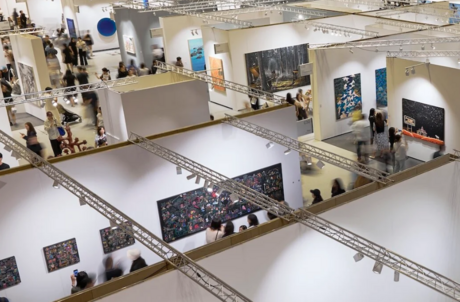



A legendary piece of American art history returned to its roots this week when Lévy Gorvy Dayan gallery sold Andy Warhol's iconic portrait "Muhammad Ali" (1977) for $18 million during the VIP preview of Art Basel Miami Beach. The sale took place just hundreds of feet from where the boxing legend made his historic mark more than 60 years ago, creating a powerful connection between art, sports, and cultural history.
The painting, which features Warhol's distinctive pop art style, was autographed on the back by Muhammad Ali himself and was previously owned by Richard L. Weisman, who originally commissioned Warhol's famous Athletes series. According to gallery representatives, the location of the sale was no coincidence – it was specifically chosen to honor the historical significance of the venue where Ali's legendary career truly began.
In February 1964, a 22-year-old fighter then known as Cassius Clay shocked the sporting world at the Miami Beach Convention Center when he defeated Sonny Liston in an upset victory that would transform him into a global icon. The Convention Center's own historical records describe the match as "a clash of personalities" and "a politically charged spectacle during the height of the Civil Rights Movement." The famous photograph of Ali standing triumphantly over the defeated Liston remains one of the most iconic sports images ever captured.
Warhol created his portrait of Muhammad Ali thirteen years after that pivotal fight, capturing the athlete who had become not just a sports figure but a powerful symbol of civil rights and a redefinition of celebrity culture in America. The artwork has since become one of the most recognizable portraits of the boxing legend, embodying both Warhol's artistic genius and Ali's cultural impact.
Dealer Brett Gorvy revealed that the sale came together with remarkable speed, with the work being consigned just ten days before the fair. "It all happened basically just a week after the [auction] sales," Gorvy told reporters. "We realized we had this masterpiece at a moment when the market is driven by masterpieces, and there was this amazing connection to Miami." The gallery considered various selling options including auction houses and private sales, but the combination of market momentum, historical context, and Art Basel's high-net-worth attendees made the fair the obvious choice.
The gallery employed strategic marketing by keeping the consignment secret until the last possible moment. "There was a tactic, obviously – to announce it very quickly as a surprise," Gorvy explained. This approach proved highly effective, as the painting became a focal point that drew both serious collectors and crowds paying their respects to the legendary figures it represented.
Throughday Wednesday, the gallery booth transformed into an impromptu shrine as notable figures with personal connections to Ali or Warhol's Athletes series visited the painting. Publisher Benedict Taschen, who has worked on numerous books about Ali's life, arrived to photograph the artwork. Billy Weisman, widow of Frederick Weisman, stood before the painting that had once belonged to her family's collection. Most significantly, Muhammad Ali's son Muhammad Ali Jr. and adopted son Assad Ali visited the booth, creating what Gorvy described as "a coming-home mentality."
The proximity to the original 1964 fight venue intensified the emotional and cultural response to the artwork. The Convention Center's historical materials note that Ali's victory over Liston was both an athletic upset and a pivotal moment in sports history, launching the career of one of the most legendary figures of the 20th century. This historical resonance added immeasurable value to the transaction beyond the monetary figure.
For Lévy Gorvy Dayan, the successful sale demonstrates the continued importance of art fairs as venues for major transactions, even in an uncertain market environment. "One of the big issues galleries have had is: how do you get someone to fall in love with a work when they're buying remotely?" Gorvy noted. "Showing the Ali painting freshly, in a place where it's a surprise, proved to be an antidote" to remote buying challenges.
Miami has long been recognized as fertile ground for significant secondary-market art sales, with historic works by masters like Mark Rothko and Roy Lichtenstein frequently changing hands at the fair. The gallery's recent sale of a $25.5 million Gerhard Richter work in Paris further demonstrates how aggressively collectors are pursuing trophy-grade artworks in the current market.
However, nothing in Paris or New York could match the unique resonance of selling Muhammad Ali's portrait in the very building where he transformed from contender to champion, from underdog to icon. As Gorvy eloquently put it, "We all love a story with a great beginning and a great ending." True to the secretive nature of high-end art sales, Gorvy declined to reveal the identity of the buyer, stating only that the new owner is a private collector who now possesses this remarkable piece of American cultural history.