
Sayart.net - Vienna′s Albertina Museum Showcases Retrospective of Photographer Lisette Model

  • December 05, 2025 (Fri)

Vienna's Albertina Museum Showcases Retrospective of Photographer Lisette Model

Sayart / Published December 5, 2025 11:14 AM
  • -
  • +
  • print

The Albertina Museum in Vienna is presenting an impressive retrospective of photographer Lisette Model, marking a late homecoming for the Vienna-born artist who became a legendary figure in American photography. The exhibition features 154 works by Model, who left her hometown in 1925 and never returned, yet went on to revolutionize street photography in New York.

Born Élise Amélie Félicie Stern in 1901 in Vienna's 8th district, Model's path to photography was far from predetermined. Her father was an assimilated Jewish doctor who changed the family name to Seybert, while her mother was a French Catholic. The wealthy family provided Model with a privileged education, including studies in harmony and composition with Arnold Schoenberg, voice lessons, and exposure to the Expressionist movement where she initially considered painting as a career.

Model's life changed dramatically when her father died in 1924, leaving the family fortune largely depleted amid rising antisemitism. At age 25, she moved to Paris with her mother and sister, where she would discover her true calling. Faced with the need to find a profession, Model turned to photography, then an emerging field particularly attractive to young women. In Paris, painter and portrait photographer Rogi André advised her to photograph only subjects that hit her "like a punch to the gut."

Armed with her Rolleiflex camera, Model began documenting the marginalized members of Parisian society - homeless individuals and war veterans who filled the streets following World War I. She worked independently, without magazine commissions, getting close to her subjects and choosing tight crop frames. Her negatives, marked with her annotations, demonstrate how crucial control over image framing was to her artistic vision from the very beginning.

Model's breakthrough came in 1934 when she photographed wealthy, decadent beachgoers on the Promenade des Anglais in Cannes, revealing another side of French interwar society. Her images captured blasé idlers whose gazes into the camera appeared almost contemptuous, as if this bothersome photographer could do them no harm. In response, Model wielded her camera like a weapon. This series launched her career when it appeared in the leftist magazine Regards, known for its class struggle rhetoric - a connection that would later prove problematic.

In the same year, Model met Evsa Model, a Russian Jewish artist and rather unsuccessful proponent of constructivist painting. She married him, took his name, and moved with him to New York in 1938, initially to visit Evsa's sister. However, return to Europe soon became impossible - Model's brother Salvator would be murdered in Auschwitz in 1944.

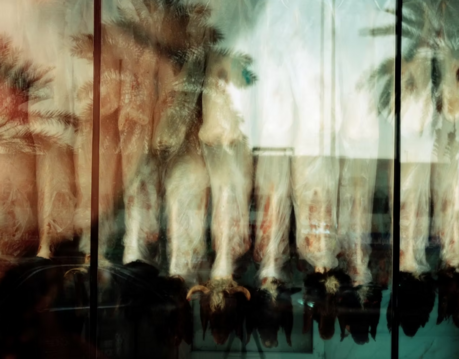
New York's dynamism fascinated Model, while the city's social divisions repelled her - the poor of the Lower East Side contrasted sharply with the wealthy elite of Wall Street. She also grappled with the ambivalences of living in an exile community in a miserable basement apartment. Her style evolved as she began photographing from behind reflective store windows. Her "Reflections" series offered enigmatic perspectives that couldn't be easily decoded, though the images remained unmanipulated.

Model developed innovative techniques, such as standing on basement stairs with her camera at sidewalk level to create her "Running Legs" series, capturing the feet and legs of passersby. These images revealed not only the uniformity of shoe fashion and clothing lengths but also offered an unusual ground-level perspective in a city of skyscrapers where most photographers looked upward.

She frequented famous music venues like Sammy's, photographing singers often from below. Though initially working without assignments, Model proved to be a networking genius, reaching the center of the scene within a few years. By 1942, the Museum of Modern Art was purchasing her work. She photographed for PM's Weekly and Harper's Bazaar under legendary art director Alexei Brodovitch.

Her first magazine appearance in 1941 resulted in the iconic image "Bathers at Coney Island, New York," probably her most famous photograph showing a joyful, voluptuous woman in a sumo wrestler-like pose. As Duncan Forbes writes in the exhibition catalog, "Her abundant, powerful flesh celebrates female physicality" and represents "the exact opposite of what the fashion industry glorified."

Model befriended Berenice Abbott, who worked as a member of the socialist New York Photo League, where Model's uncompromising street photography fit perfectly into their portfolio. In San Francisco in 1949, she mingled with opera audiences, and in Reno - a destination for bureaucracy-free divorces - her portraits of newly divorced women showed surprising empathetic tenderness.

Walter Moser, head of the Albertina's photography collection who assembled the retrospective, believes Model's willingness to crop photographs extensively helped her career. Twenty-five works come from the Albertina's own collection, while the majority of images now reside in Canada's National Gallery in Ottawa. According to Moser, Model never compromised to please a magazine, preferring to shoot first and speak with her subjects afterward.

Moser interprets Model's perspective as distinctly Viennese, shaped by her internalization of Expressionist painting techniques, partly through exposure to works by her teacher Schoenberg, who was also a painter. She had no problem with ugliness, as her Lower East Side series powerfully demonstrates. When fellow Photo League member Paul Strand warned her that "you can't photograph America like this," she proved him wrong - but paid a steep price during the McCarthy era.

Following a 1954 interrogation, Model's FBI file reveals the high cost of her artistic integrity. The investigation focused on her connection to the now-dissolved Photo League and questioned whether she was a Communist Party member. Model faced threats of denaturalization and was placed on the National Security Watchlist after refusing to cooperate with the FBI. Clients turned away, including Harper's Bazaar.

After this second experience of expulsion, Model rigorously controlled interpretations of her work, denying any political messages in her photographs and obscuring biographical facts. She increasingly turned to teaching at the New School for Social Research and through private courses. As a natural pedagogical talent, she gathered many students around her, most famously Diane Arbus.

In the mid-1950s, Model explored a new milieu with her series at Belmont Park racetrack in New York, eventually turning to jazz greats as subjects. Then began her withdrawal from public life - she stopped publishing in 1959. Though she continued photographing, she rarely had prints made.

A major wave of rediscovery brought Model's work to the New Orleans Museum of Art in 1981, with the exhibition traveling to Germany's Folkwang Museum Essen the following year. Lisette Model died in New York in 1983. Vienna, the city she never revisited, named a square after her nine years ago in the 8th district - perhaps the least the city could do, as the current exhibition underscores.

The "Lisette Model: Retrospective" runs at the Albertina Museum in Vienna until February 22, 2026. The exhibition catalog, published by Prestel Verlag, costs 32.90 euros at the museum and 49 euros in bookstores.


The Albertina Museum in Vienna is presenting an impressive retrospective of photographer Lisette Model, marking a late homecoming for the Vienna-born artist who became a legendary figure in American photography. The exhibition features 154 works by Model, who left her hometown in 1925 and never returned, yet went on to revolutionize street photography in New York.

Born Élise Amélie Félicie Stern in 1901 in Vienna's 8th district, Model's path to photography was far from predetermined. Her father was an assimilated Jewish doctor who changed the family name to Seybert, while her mother was a French Catholic. The wealthy family provided Model with a privileged education, including studies in harmony and composition with Arnold Schoenberg, voice lessons, and exposure to the Expressionist movement where she initially considered painting as a career.

Model's life changed dramatically when her father died in 1924, leaving the family fortune largely depleted amid rising antisemitism. At age 25, she moved to Paris with her mother and sister, where she would discover her true calling. Faced with the need to find a profession, Model turned to photography, then an emerging field particularly attractive to young women. In Paris, painter and portrait photographer Rogi André advised her to photograph only subjects that hit her "like a punch to the gut."

Armed with her Rolleiflex camera, Model began documenting the marginalized members of Parisian society - homeless individuals and war veterans who filled the streets following World War I. She worked independently, without magazine commissions, getting close to her subjects and choosing tight crop frames. Her negatives, marked with her annotations, demonstrate how crucial control over image framing was to her artistic vision from the very beginning.

Model's breakthrough came in 1934 when she photographed wealthy, decadent beachgoers on the Promenade des Anglais in Cannes, revealing another side of French interwar society. Her images captured blasé idlers whose gazes into the camera appeared almost contemptuous, as if this bothersome photographer could do them no harm. In response, Model wielded her camera like a weapon. This series launched her career when it appeared in the leftist magazine Regards, known for its class struggle rhetoric - a connection that would later prove problematic.

In the same year, Model met Evsa Model, a Russian Jewish artist and rather unsuccessful proponent of constructivist painting. She married him, took his name, and moved with him to New York in 1938, initially to visit Evsa's sister. However, return to Europe soon became impossible - Model's brother Salvator would be murdered in Auschwitz in 1944.

New York's dynamism fascinated Model, while the city's social divisions repelled her - the poor of the Lower East Side contrasted sharply with the wealthy elite of Wall Street. She also grappled with the ambivalences of living in an exile community in a miserable basement apartment. Her style evolved as she began photographing from behind reflective store windows. Her "Reflections" series offered enigmatic perspectives that couldn't be easily decoded, though the images remained unmanipulated.

Model developed innovative techniques, such as standing on basement stairs with her camera at sidewalk level to create her "Running Legs" series, capturing the feet and legs of passersby. These images revealed not only the uniformity of shoe fashion and clothing lengths but also offered an unusual ground-level perspective in a city of skyscrapers where most photographers looked upward.

She frequented famous music venues like Sammy's, photographing singers often from below. Though initially working without assignments, Model proved to be a networking genius, reaching the center of the scene within a few years. By 1942, the Museum of Modern Art was purchasing her work. She photographed for PM's Weekly and Harper's Bazaar under legendary art director Alexei Brodovitch.

Her first magazine appearance in 1941 resulted in the iconic image "Bathers at Coney Island, New York," probably her most famous photograph showing a joyful, voluptuous woman in a sumo wrestler-like pose. As Duncan Forbes writes in the exhibition catalog, "Her abundant, powerful flesh celebrates female physicality" and represents "the exact opposite of what the fashion industry glorified."

Model befriended Berenice Abbott, who worked as a member of the socialist New York Photo League, where Model's uncompromising street photography fit perfectly into their portfolio. In San Francisco in 1949, she mingled with opera audiences, and in Reno - a destination for bureaucracy-free divorces - her portraits of newly divorced women showed surprising empathetic tenderness.

Walter Moser, head of the Albertina's photography collection who assembled the retrospective, believes Model's willingness to crop photographs extensively helped her career. Twenty-five works come from the Albertina's own collection, while the majority of images now reside in Canada's National Gallery in Ottawa. According to Moser, Model never compromised to please a magazine, preferring to shoot first and speak with her subjects afterward.

Moser interprets Model's perspective as distinctly Viennese, shaped by her internalization of Expressionist painting techniques, partly through exposure to works by her teacher Schoenberg, who was also a painter. She had no problem with ugliness, as her Lower East Side series powerfully demonstrates. When fellow Photo League member Paul Strand warned her that "you can't photograph America like this," she proved him wrong - but paid a steep price during the McCarthy era.

Following a 1954 interrogation, Model's FBI file reveals the high cost of her artistic integrity. The investigation focused on her connection to the now-dissolved Photo League and questioned whether she was a Communist Party member. Model faced threats of denaturalization and was placed on the National Security Watchlist after refusing to cooperate with the FBI. Clients turned away, including Harper's Bazaar.

After this second experience of expulsion, Model rigorously controlled interpretations of her work, denying any political messages in her photographs and obscuring biographical facts. She increasingly turned to teaching at the New School for Social Research and through private courses. As a natural pedagogical talent, she gathered many students around her, most famously Diane Arbus.

In the mid-1950s, Model explored a new milieu with her series at Belmont Park racetrack in New York, eventually turning to jazz greats as subjects. Then began her withdrawal from public life - she stopped publishing in 1959. Though she continued photographing, she rarely had prints made.

A major wave of rediscovery brought Model's work to the New Orleans Museum of Art in 1981, with the exhibition traveling to Germany's Folkwang Museum Essen the following year. Lisette Model died in New York in 1983. Vienna, the city she never revisited, named a square after her nine years ago in the 8th district - perhaps the least the city could do, as the current exhibition underscores.

The "Lisette Model: Retrospective" runs at the Albertina Museum in Vienna until February 22, 2026. The exhibition catalog, published by Prestel Verlag, costs 32.90 euros at the museum and 49 euros in bookstores.
WEEKLY HOTISSUE