


Buk-Seoul Museum of Art in northern Seoul is currently presenting two innovative exhibitions that demonstrate how contemporary artists can transform scientific research into new forms of knowledge. The museum features works by Korean artist Lee So-yo and British artist Anna Ridler, both of whom blend rigorous research methodologies with artistic creativity to explore how art can generate fresh insights about the natural world and human understanding.
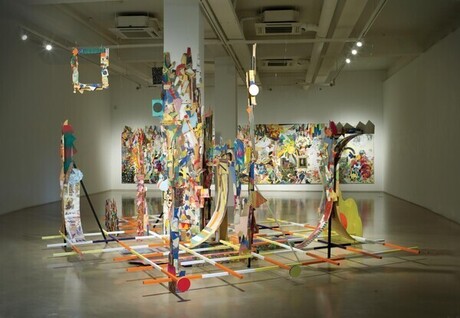
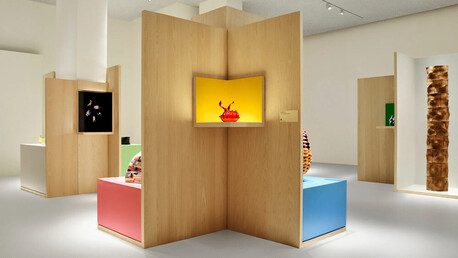
Lee So-yo's exhibition "Unfinished Flora – Soyo Lee" centers around a historical botanical text titled "Illustrations of Joseon Plants: A Selection of Toxic Plants," which was written in 1948 by Korean botanical researchers Toh Pong-shyup and Shim Hak-chin. These researchers documented Korean flora through direct observation and field collection, creating an important but incomplete record of the peninsula's plant life. Lee's artistic intervention transforms this historical document into what resembles an expanded research archive, incorporating text drawings, preserved plant specimens, detailed diagrams, and various reference materials that function as visual annotations to the original book's botanical record.
The Korean artist's presentation methodology involves collecting plants herself and studying the materials extensively before transforming them into complex installations that combine preserved specimens with her own drawings. Through this process, Lee effectively adds visual notes and contemporary perspectives to the original 1948 text. Her approach demonstrates how archival research can be combined with hands-on fieldwork to create a meticulous inquiry into the processes of knowledge production and dissemination across different time periods.
Meanwhile, Anna Ridler's exhibition "Time Blooms – Anna Ridler" explores the fascinating intersection of technology, nature, and artistic expression, where critical reflection meets sensorial beauty. The London-based artist has gained recognition for her innovative use of artificial intelligence as a primary artistic tool, transforming datasets that she personally collects and studies into compelling visual forms using GAN (Generative Adversarial Network) machine learning models.
Ridler's work draws inspiration from 18th-century naturalist Carl Linnaeus's concept of the flower clock, which observed that different flower species open and close at specific times throughout the day according to their natural biological rhythms. Rather than relying on human-created time measurements such as hours and minutes, Ridler visualizes the passage of time through these natural rhythms, effectively showing how flowers follow their own intrinsic biological schedules that operate independently of human timekeeping systems.
Choi Eun-ju, director of SeMA, emphasized the significance of these research-based artistic practices, stating, "Research undertaken by artists is not merely preparatory work but can become a new mode of knowledge production. Through the artists' experiments that traverse art history, natural history, biology, geography and AI, we hope audiences will reflect on what questions art can pose about how we understand the world today."
Both exhibitions opened on Thursday and will continue running through March 22, 2026, providing visitors with an extended opportunity to experience how contemporary artists are pushing the boundaries of traditional research methodologies and creating new forms of knowledge that bridge the gap between scientific inquiry and artistic expression.