Klimt’s Enigmatic ‘Portrait of a Lady’ Arrives in Seoul for the First Time in History
Jason Yim / Published December 7, 2025 09:49 AM
Jason Yim
A masterpiece by Austrian Symbolist Gustav Klimt is set to make its historic debut in Korea. “The Miracle of Klimt and Ricci Oddi: From the Galleria d’Arte Moderna Ricci Oddi, Piacenza” will open at Seoul’s My Art Museum on December 19, bringing with it the sensational Portrait of a Lady—a work that disappeared in 1997, reemerged like a myth in 2019, and has never before left Italy.
Gustav Klimt, Portrait of a Lady (1916–17). Oil on canvas. Courtesy of the Galleria d’Arte Moderna Ricci Oddi, Piacenza.
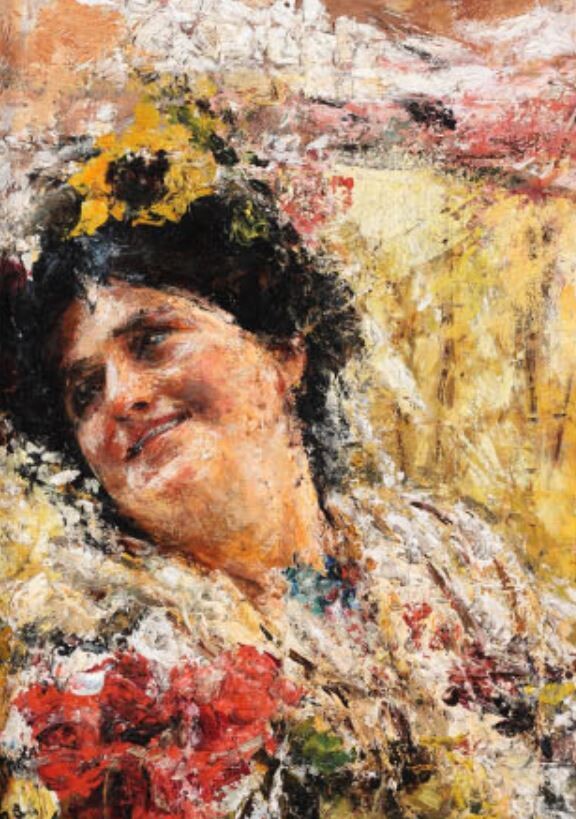
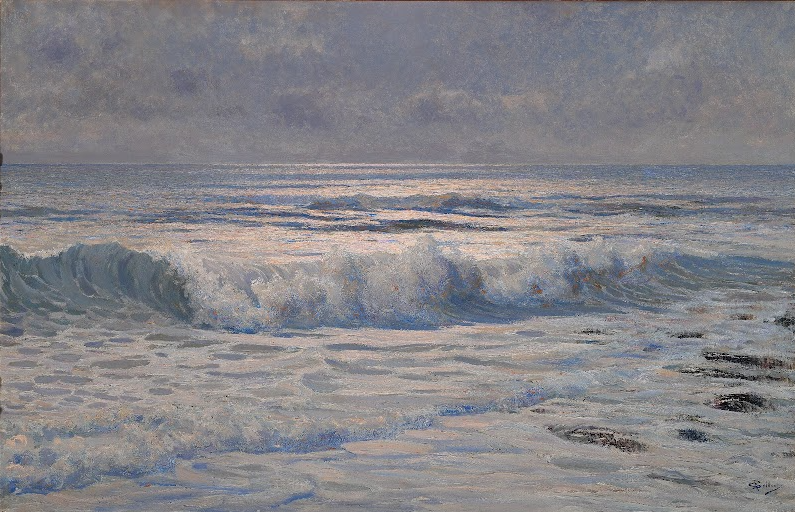
The exhibition will also showcase more than 70 treasures from the Ricci Oddi Modern Art Gallery’s collection, including works by some of 19th-century Italy’s most celebrated painters. Among them are the prodigious realist Antonio Mancini (1852–1930) and the great landscape artist Giorgio Belloni (1861–1944), offering Korean audiences a rare opportunity to survey the development of Italian art from Impressionism to early Modernism in a single venue. At the center stands Klimt’s enigmatic portrait—rediscovered after 23 years and now unveiled on the global stage for the very first time.
Portrait of a Lady has stunned the world not once but twice. The first shock came in 1997, when the painting vanished just before an exhibition, leaving behind only its empty frame deliberately placed on the museum’s rooftop. Investigators at the time described the scene as “a ghostly theft.” The second shock followed in late 2019, when gardeners clearing ivy from the museum walls discovered a concealed niche—inside it, perfectly preserved, was the missing Klimt. The case remains unsolved to this day. Now, the work finally leaves Italian soil.
Courtesy of the Galleria d’Arte Moderna Ricci Oddi, Piacenza.
Klimt, a founding figure of the 1897 Vienna Secession—a radical movement of young artists who broke away from conservative academic art—reshaped European modernism with his ornamental use of gold leaf and psychologically charged symbolism. His influence remains profound. This month, he once again captivated the global art market when Portrait of Elisabeth Lederer fetched $236.4 million at a New York evening sale, becoming the second-most expensive painting ever sold at auction, surpassed only by Leonardo da Vinci’s Salvator Mundi (Christie’s, 2017).
But Portrait of a Lady stands apart even among Klimt’s works. Beneath the familiar image lies another woman—an entirely different portrait concealed under the final composition. This discovery emerged after an art student insisted the painting resembled a long-lost Klimt work. X-ray analysis proved her right: a hidden portrait lay beneath. One leading theory suggests Klimt, grieving over the sudden loss of a woman he adored, painted over her likeness, sealing a deeply personal story within the canvas. Uncharacteristically, the work contains none of his signature gold leaf, offering instead one of the most intimate and human depictions in his oeuvre.
The exhibition unfolds across 13 thematic sections—including “The Klimt Enigma,” nature, cities, landscapes, women, memory, and childhood—each exploring scenes of Italian life and history through the eyes of artists who captured the nation’s profound social and cultural shifts. Rather than a simple presentation of a collection, the exhibition aims to reveal the multilayered evolution of Italian modern art, illuminating the era’s light and shadow.
Courtesy of the Galleria d’Arte Moderna Ricci Oddi, Piacenza.
The Ricci Oddi Museum itself carries significant heritage. Founded by jurist and patron Giuseppe Ricci Oddi, the institution houses a wide-ranging survey of northern Italian Impressionism, Scapigliatura, Symbolism, and the Macchiaioli movement, covering the transitional decades from the late 19th to early 20th century.
“The Miracle of Klimt and Ricci Oddi” runs from December 19, 2025, through March 22, 2026, at My Art Museum in Seoul, marking a landmark moment in bringing one of Europe’s most mysterious masterpieces to Asia for the first time.
SayArt.net Jason Yim yimjongho1969@gmail.com
A masterpiece by Austrian Symbolist Gustav Klimt is set to make its historic debut in Korea. “The Miracle of Klimt and Ricci Oddi: From the Galleria d’Arte Moderna Ricci Oddi, Piacenza” will open at Seoul’s My Art Museum on December 19, bringing with it the sensational Portrait of a Lady—a work that disappeared in 1997, reemerged like a myth in 2019, and has never before left Italy.
Gustav Klimt, Portrait of a Lady (1916–17). Oil on canvas. Courtesy of the Galleria d’Arte Moderna Ricci Oddi, Piacenza.
The exhibition will also showcase more than 70 treasures from the Ricci Oddi Modern Art Gallery’s collection, including works by some of 19th-century Italy’s most celebrated painters. Among them are the prodigious realist Antonio Mancini (1852–1930) and the great landscape artist Giorgio Belloni (1861–1944), offering Korean audiences a rare opportunity to survey the development of Italian art from Impressionism to early Modernism in a single venue. At the center stands Klimt’s enigmatic portrait—rediscovered after 23 years and now unveiled on the global stage for the very first time.
Portrait of a Lady has stunned the world not once but twice. The first shock came in 1997, when the painting vanished just before an exhibition, leaving behind only its empty frame deliberately placed on the museum’s rooftop. Investigators at the time described the scene as “a ghostly theft.” The second shock followed in late 2019, when gardeners clearing ivy from the museum walls discovered a concealed niche—inside it, perfectly preserved, was the missing Klimt. The case remains unsolved to this day. Now, the work finally leaves Italian soil.
Courtesy of the Galleria d’Arte Moderna Ricci Oddi, Piacenza.
Klimt, a founding figure of the 1897 Vienna Secession—a radical movement of young artists who broke away from conservative academic art—reshaped European modernism with his ornamental use of gold leaf and psychologically charged symbolism. His influence remains profound. This month, he once again captivated the global art market when Portrait of Elisabeth Lederer fetched $236.4 million at a New York evening sale, becoming the second-most expensive painting ever sold at auction, surpassed only by Leonardo da Vinci’s Salvator Mundi (Christie’s, 2017).
But Portrait of a Lady stands apart even among Klimt’s works. Beneath the familiar image lies another woman—an entirely different portrait concealed under the final composition. This discovery emerged after an art student insisted the painting resembled a long-lost Klimt work. X-ray analysis proved her right: a hidden portrait lay beneath. One leading theory suggests Klimt, grieving over the sudden loss of a woman he adored, painted over her likeness, sealing a deeply personal story within the canvas. Uncharacteristically, the work contains none of his signature gold leaf, offering instead one of the most intimate and human depictions in his oeuvre.
The exhibition unfolds across 13 thematic sections—including “The Klimt Enigma,” nature, cities, landscapes, women, memory, and childhood—each exploring scenes of Italian life and history through the eyes of artists who captured the nation’s profound social and cultural shifts. Rather than a simple presentation of a collection, the exhibition aims to reveal the multilayered evolution of Italian modern art, illuminating the era’s light and shadow.
Courtesy of the Galleria d’Arte Moderna Ricci Oddi, Piacenza.
The Ricci Oddi Museum itself carries significant heritage. Founded by jurist and patron Giuseppe Ricci Oddi, the institution houses a wide-ranging survey of northern Italian Impressionism, Scapigliatura, Symbolism, and the Macchiaioli movement, covering the transitional decades from the late 19th to early 20th century.
“The Miracle of Klimt and Ricci Oddi” runs from December 19, 2025, through March 22, 2026, at My Art Museum in Seoul, marking a landmark moment in bringing one of Europe’s most mysterious masterpieces to Asia for the first time.
Warning: Trying to access array offset on value of type bool in /home/sayart/public_html/_libs/smarty/templates_c/103e99f6d7d08ee6b6541efd32c0ef2f33076acc_0.file.news_3t_view.tpl.php on line 56
Warning: Trying to access array offset on value of type bool in /home/sayart/public_html/_libs/smarty/templates_c/103e99f6d7d08ee6b6541efd32c0ef2f33076acc_0.file.news_3t_view.tpl.php on line 59