

Anni Albers, a pioneering figure in modern textile design, is receiving long-overdue recognition in Switzerland through a comprehensive solo exhibition at the Zentrum Paul Klee in Bern that runs until February 22, 2026. The show highlights how Albers transformed weaving from a traditional craft into a legitimate art form and architectural element, establishing herself as a master of texture and composition. Her journey began unexpectedly when she enrolled at the Bauhaus in Weimar, the revolutionary school founded in 1919 that offered women unprecedented access to artistic education. Despite her ambition to become an architect and work like a man in what she considered an engineering field, the Bauhaus relegated women exclusively to the weaving workshop based on the belief that they struggled with three-dimensional vision. This limitation, imposed by influential instructor Johannes Itten, forced Anneliese Fleischmann, who would soon marry fellow Bauhaus teacher Josef Albers and become Anni Albers, to redirect her creative energy into textiles. Rather than accepting this as a compromise, she recognized the potential within what she called destiny placing soft threads in her hands to build a future. Her initial resistance evolved into confidence as she discovered that weaving, one of humanity's oldest crafts, offered limitless possibilities for experimentation with materials, textures, and colors. The Bauhaus workshop lacked structured teaching, which paradoxically gave Albers the freedom to innovate and push boundaries without constraint. After emigrating to America in 1933, Albers found an even more experimental environment at Black Mountain College in North Carolina, where she could truly reinvent textile art. Influences from Mexican and South American ornamental traditions opened new avenues for her work, leading to what she termed Pictorial Weavings. These pieces essentially liberated themselves from conventional textile art, becoming mysterious, highly artificial paintings created with threads instead of paint. Viewed up close, their textures grow increasingly enigmatic, communicating through a wordless language that suggests meaning without revealing it completely. Her work evolved into intuitive writing within the limited space of the fabric, open to interpretation and freed from architectural constraints. The Bern exhibition emphasizes Albers's relationship with architecture, displaying her wall hangings and room-sized textiles in dimmed lighting that makes them glow from floor to ceiling. Rare loans from museums and institutions demonstrate the breadth of her repertoire and her remarkable inventiveness. Many of these works are being shown for the first time, introducing visitors to a pioneer of what would later be called Fiber Art. The exhibition also presents her major commissioned works, which remain largely unknown in Switzerland, including pieces designed for public buildings, private residences, and sacred spaces like synagogues. Some of her large-scale works possess a hieratic, timeless quality that functions as a language without words. Albers was conscious of her Jewish heritage, creating powerful symbolic pieces such as Six Prayers, a six-panel work she wove in 1967 for the Jewish Museum in New York as a Holocaust memorial. This commission marked her final work at the loom before she turned entirely to graphic art for her late career. At nearly seventy, the physical demands of weaving became too strenuous, leading her to discover a new medium where threads could dance freely across paper. Her late watercolors and prints show threads tangling into knots, wobbling and breaking free from the rigid architecture of weaving, sometimes resembling crumbling walls. The catalogue for this important exhibition is available for 39 Swiss francs, offering deeper insight into an artist whose name has too often been overshadowed by her husband's but whose influence on abstract art and textile design has been profound and lasting.
Latest article
- ‘Shades of Ink’ Brings Stories of Nonsan to Seoul
- Jang Hyejin Finds the Unfamiliar in Everyday Scenes
- ILLIT’s ‘Magnetic’ Surpasses 900 Million Spotify Streams
- YENA to Release Korean-Language Remake of Ai Otsuka’s ‘Sakuranbo’
- National Dance Festival Enters Final Week Across Seoul
- King Kanna Examines the Boundaries of the ‘Normal’ Body
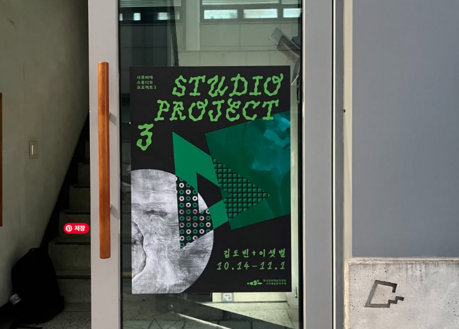
- PS Sarubia Opens ‘Studio Project 3’ With Dobin Kim and Setbyul Li
- Luke Park Revisits Natural Forms in ‘Ventilation’