


Mohamed Ahmed Ibrahim, one of the United Arab Emirates' most celebrated contemporary artists, has unveiled a major new exhibition in Abu Dhabi that transforms the gallery space into an immersive forest ecosystem crafted entirely from papier-mâché. The show, which opened this month at a leading cultural venue in the UAE capital, represents a bold departure from traditional exhibition formats by inviting visitors to wander through a dense, living landscape of sculptural forms. Ibrahim's latest work explores the deep connection between human consciousness and the natural world, using sustainable materials to create a vibrant, otherworldly environment that challenges conventional boundaries between art and nature.
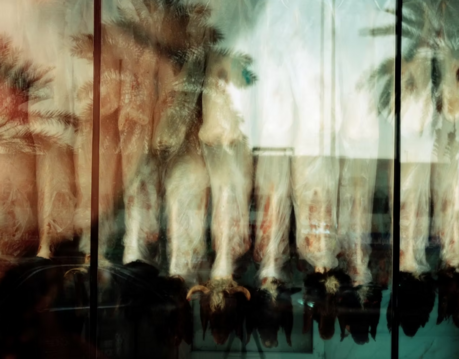
The exhibition's centerpiece, titled "In Transit," features a sprawling installation of papier-mâché sculptures arranged in a thick, forest-like configuration that occupies the entire main gallery. Visitors navigate narrow pathways between towering tree forms, encountering painted surfaces that shimmer with organic colors drawn from the UAE's natural landscape. Ibrahim spent months collecting recycled paper and natural fibers to construct these forms, each one unique in its shape and texture. The sculptures seem to breathe and grow within the space, creating an atmosphere that is both familiar and fantastical, as if stepping into a dreamlike woodland that exists somewhere between reality and imagination.
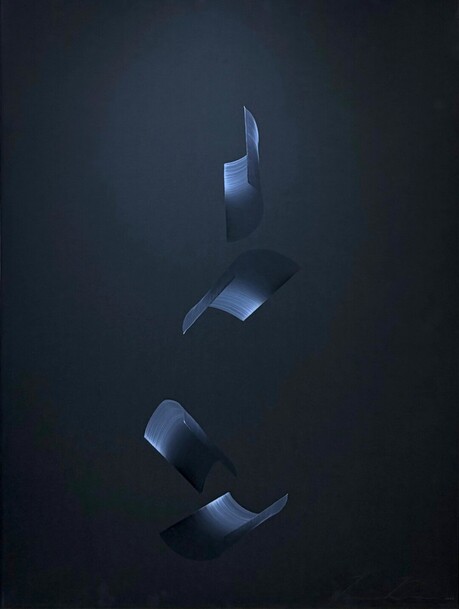
Following the sensory richness of the forest installation, the second section, "Traces Made Visible," offers a dramatic contrast through a series of minimalist monochrome works that serve as what co-curator Noor Al Mehairbi describes as a "visual palate cleanser." These pieces strip away color to reveal the essential formal qualities of Ibrahim's artistic practice, emphasizing line, texture, and negative space. The black-and-white compositions include drawings, paintings, and low-relief sculptures that document the artist's creative process, showing the underlying structures and sketches that inform his more complex works. This section highlights Ibrahim's mastery of restraint and his ability to convey profound meaning through simplicity.
According to co-curator Noor Al Mehairbi, the exhibition is deliberately structured as a landmark presentation of Ibrahim's recent practice rather than a comprehensive retrospective. "We wanted to focus on his evolution over the past five years, particularly his deepening engagement with environmental themes and sustainable art practices," Al Mehairbi explains. The remaining two sections continue this exploration, with one dedicated to site-specific installations that respond to the gallery's architecture, and another featuring a series of mixed-media works that incorporate actual plant materials collected from the UAE's diverse ecosystems. This four-part structure creates a rhythmic journey that moves between immersive experience, quiet contemplation, and active engagement.
Born in 1962 in the coastal town of Khor Fakkan, Mohamed Ahmed Ibrahim has been a pivotal figure in the development of contemporary art in the UAE for over three decades. As a founding member of the Emirates Fine Arts Society, he helped establish the infrastructure for artistic expression in a region that had few formal venues for contemporary work. His practice has consistently drawn inspiration from the natural environment of the Arabian Peninsula, translating the textures, colors, and spiritual essence of the desert, mountains, and coastline into abstract visual languages. This exhibition marks his largest solo presentation in Abu Dhabi to date.
The exhibition runs through the end of the year at the Manarat Al Saadiyat, offering residents and tourists alike a chance to experience Ibrahim's visionary world. Educational programs accompanying the show include artist talks, papier-mâché workshops for children, and guided tours that explain the sustainable techniques employed in the artworks. By transforming industrial materials into a celebration of nature, Ibrahim not only creates a powerful aesthetic experience but also raises important questions about environmental conservation, cultural identity, and the role of art in fostering ecological awareness. The show sets a new standard for immersive art experiences in the Gulf region.