
Sayart.net - Sennestadt Sculpture Trail: Bielefeld′s Open-Air Gallery Blends Art, History, and Interactivity

  • January 12, 2026 (Mon)

Sennestadt Sculpture Trail: Bielefeld's Open-Air Gallery Blends Art, History, and Interactivity

Sayart / Published January 12, 2026 05:16 AM
  • -
  • +
  • print

The Sennestadt district of Bielefeld, Germany, has transformed its urban landscape into an extraordinary open-air gallery through a comprehensive sculpture trail that weaves art, history, and community engagement throughout the neighborhood. This unique cultural initiative features an impressive collection of works by internationally renowned sculptors alongside pieces by celebrated local artists, all freely accessible to the public. The Sennestadt Association has recently published a handy DIN-A6 format brochure complete with maps, photographs, and background information, making it easy for visitors to explore the trail at their own pace. Guided tours are also being offered this year, providing deeper insights into the stories behind these captivating works.

Among the most prominent installations are pieces by world-famous artists such as Anthony Cragg and Manfred Pernice, whose works anchor the trail with their artistic gravitas. Cragg's three-part sculpture "Auf der Lichtung" on Reichowplatz has become a favorite playground for children, who regularly climb and slide on its two smaller elements, demonstrating the successful integration of contemporary art into daily community life. Manfred Pernice's "Caravane D-Day" serves as a poignant memorial to the numerous refugees and displaced persons from eastern territories who found a new home in Sennestadt after World War II, incorporating an actual cornerstone from Normandy that commemorates the Allied landing of June 4, 1945.

The trail also showcases exceptional works by regional artists who have helped shape Bielefeld's cultural identity. Nina Koch's bronze portrait of Hans Ehrenberg at the gymnasium named after him exemplifies this local connection, as does Bruno Buschmann's "Zieglerdenkmal," which references the Dalbke brickworks and itinerant brickmakers of the nineteenth century. Jutta Kirchhoff and Woldemar Winkler contribute additional pieces that reflect the area's artistic heritage. These local works create a dialogue with the international pieces, establishing Sennestadt as a significant destination for art enthusiasts while maintaining strong ties to its own history and community values.

Several sculptures stand out for their interactive qualities and intriguing narratives. Jörg Bochow's "Arcanum rerum" (The Mystery of Things) is a rusty sphere located at the Hans-Ehrenberg-School that emits a chime when moved, encouraging tactile engagement. Inge Jaeger-Uhthoff's charming animal sculptures—featuring owls, dolphins, cats, ducks, and even a polar bear—delight both children and adults throughout the district. Perhaps most dramatically, Hubertus von der Goltz's "Gradwanderer" (Border Walker) creates the illusion of three life-sized figures balancing on the edge of the tall Sennestadthaus, crafted from aluminum sheet metal. The piece is so realistic that concerned citizens have occasionally called the fire department to report potential suicides, a testament to its powerful visual impact.

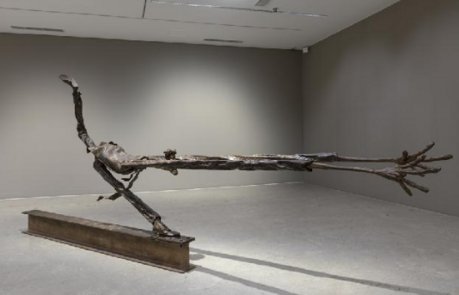
The trail also incorporates significant historical monuments that educate visitors about local heritage. The mysterious "Mordsteine" (Murder Stones) near the Frieda-Nadig-Senior Center commemorate a brutal double murder from 1660, offering a glimpse into the region's darker past. Peter Sommer's seventeen-piece terracotta work "Großes Strandstillleben" (Large Beach Still Life) floats on the Sennestadt pond, visible only from the shore, while Adolfo Siurana's stainless steel "Figura T.," affectionately called "The Diver" by locals, appears to perform a headstand on the water's surface in a nearby park pond. These works demonstrate how the trail successfully blends artistic expression with historical storytelling.

Visitors can obtain the free brochure at the Buchhandlung Kutzner bookstore, and a downloadable version is available on the Sennestadt Association website. The association is organizing guided tours on April 18, focusing on the southern section, and September 12, covering the northern area, both meeting at 3 PM in front of the Hans-Ehrenberg-Gymnasium on Elbeallee. Each participant receives a complimentary brochure. This accessible approach ensures that the sculpture trail serves as an educational resource for families, history buffs, and art lovers alike, transforming Sennestadt into a model for how public art can enrich community life while preserving cultural memory.

The Sennestadt district of Bielefeld, Germany, has transformed its urban landscape into an extraordinary open-air gallery through a comprehensive sculpture trail that weaves art, history, and community engagement throughout the neighborhood. This unique cultural initiative features an impressive collection of works by internationally renowned sculptors alongside pieces by celebrated local artists, all freely accessible to the public. The Sennestadt Association has recently published a handy DIN-A6 format brochure complete with maps, photographs, and background information, making it easy for visitors to explore the trail at their own pace. Guided tours are also being offered this year, providing deeper insights into the stories behind these captivating works.

Among the most prominent installations are pieces by world-famous artists such as Anthony Cragg and Manfred Pernice, whose works anchor the trail with their artistic gravitas. Cragg's three-part sculpture "Auf der Lichtung" on Reichowplatz has become a favorite playground for children, who regularly climb and slide on its two smaller elements, demonstrating the successful integration of contemporary art into daily community life. Manfred Pernice's "Caravane D-Day" serves as a poignant memorial to the numerous refugees and displaced persons from eastern territories who found a new home in Sennestadt after World War II, incorporating an actual cornerstone from Normandy that commemorates the Allied landing of June 4, 1945.

The trail also showcases exceptional works by regional artists who have helped shape Bielefeld's cultural identity. Nina Koch's bronze portrait of Hans Ehrenberg at the gymnasium named after him exemplifies this local connection, as does Bruno Buschmann's "Zieglerdenkmal," which references the Dalbke brickworks and itinerant brickmakers of the nineteenth century. Jutta Kirchhoff and Woldemar Winkler contribute additional pieces that reflect the area's artistic heritage. These local works create a dialogue with the international pieces, establishing Sennestadt as a significant destination for art enthusiasts while maintaining strong ties to its own history and community values.

Several sculptures stand out for their interactive qualities and intriguing narratives. Jörg Bochow's "Arcanum rerum" (The Mystery of Things) is a rusty sphere located at the Hans-Ehrenberg-School that emits a chime when moved, encouraging tactile engagement. Inge Jaeger-Uhthoff's charming animal sculptures—featuring owls, dolphins, cats, ducks, and even a polar bear—delight both children and adults throughout the district. Perhaps most dramatically, Hubertus von der Goltz's "Gradwanderer" (Border Walker) creates the illusion of three life-sized figures balancing on the edge of the tall Sennestadthaus, crafted from aluminum sheet metal. The piece is so realistic that concerned citizens have occasionally called the fire department to report potential suicides, a testament to its powerful visual impact.

The trail also incorporates significant historical monuments that educate visitors about local heritage. The mysterious "Mordsteine" (Murder Stones) near the Frieda-Nadig-Senior Center commemorate a brutal double murder from 1660, offering a glimpse into the region's darker past. Peter Sommer's seventeen-piece terracotta work "Großes Strandstillleben" (Large Beach Still Life) floats on the Sennestadt pond, visible only from the shore, while Adolfo Siurana's stainless steel "Figura T.," affectionately called "The Diver" by locals, appears to perform a headstand on the water's surface in a nearby park pond. These works demonstrate how the trail successfully blends artistic expression with historical storytelling.

Visitors can obtain the free brochure at the Buchhandlung Kutzner bookstore, and a downloadable version is available on the Sennestadt Association website. The association is organizing guided tours on April 18, focusing on the southern section, and September 12, covering the northern area, both meeting at 3 PM in front of the Hans-Ehrenberg-Gymnasium on Elbeallee. Each participant receives a complimentary brochure. This accessible approach ensures that the sculpture trail serves as an educational resource for families, history buffs, and art lovers alike, transforming Sennestadt into a model for how public art can enrich community life while preserving cultural memory.
WEEKLY HOTISSUE