The installation view of the exhibition, Courtesy of Gana Art Center
British artist Edmund de Waal will open his solo exhibition “rain diary” at Gana Art Center in Seoul’s Pyeongchang-dong district on Aug. 28.
The exhibition brings together 14 installations made during the past two years. The works combine ceramic vessels with metal, marble and historical fragments to examine memory and the movement of objects.
De Waal began working with clay as a child and later completed a two-year apprenticeship with British potter Geoffrey Whiting. After graduating from the University of Cambridge, he studied Japanese ceramics at the Mejiro Ceramics Studio in Tokyo.
He also works as a writer. His 2010 family memoir “The Hare with Amber Eyes” traces the journeys of 264 Japanese netsuke inherited through his family and uses the objects to examine the history of a European Jewish family.
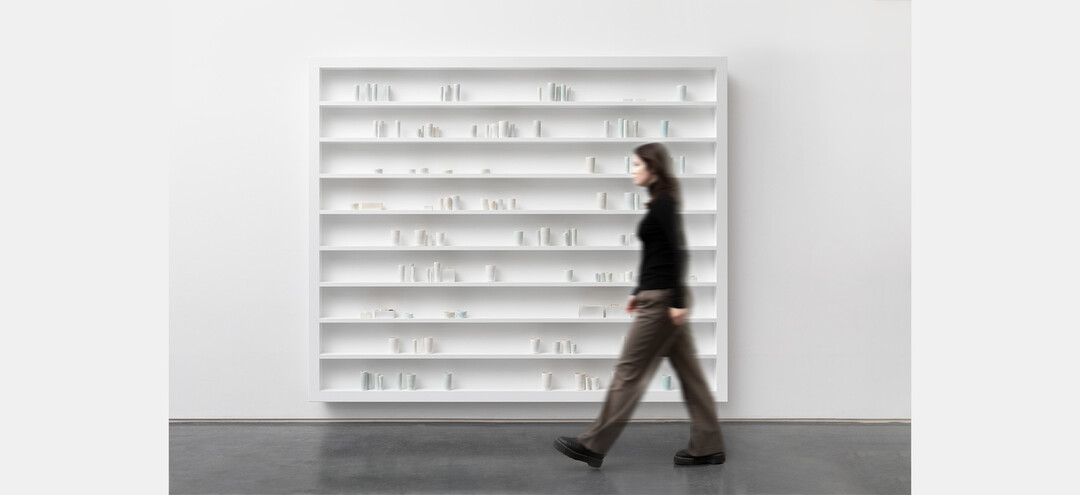
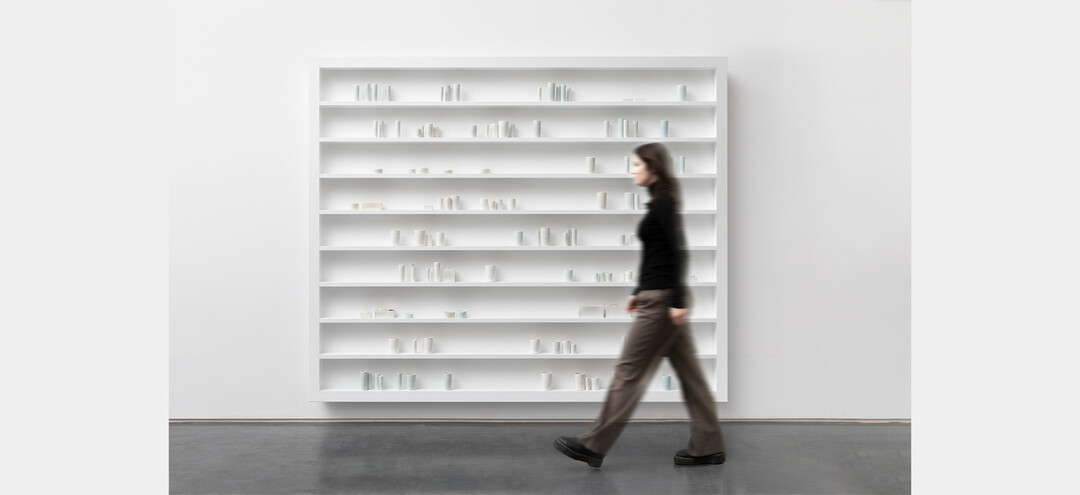
The exhibition’s title work, “rain diary,” consists of 118 celadon-glazed vessels and 14 small porcelain boxes containing fragments of ceramic and silver. Its title is drawn from a poem by Indonesian-born American poet Li-Young Lee.
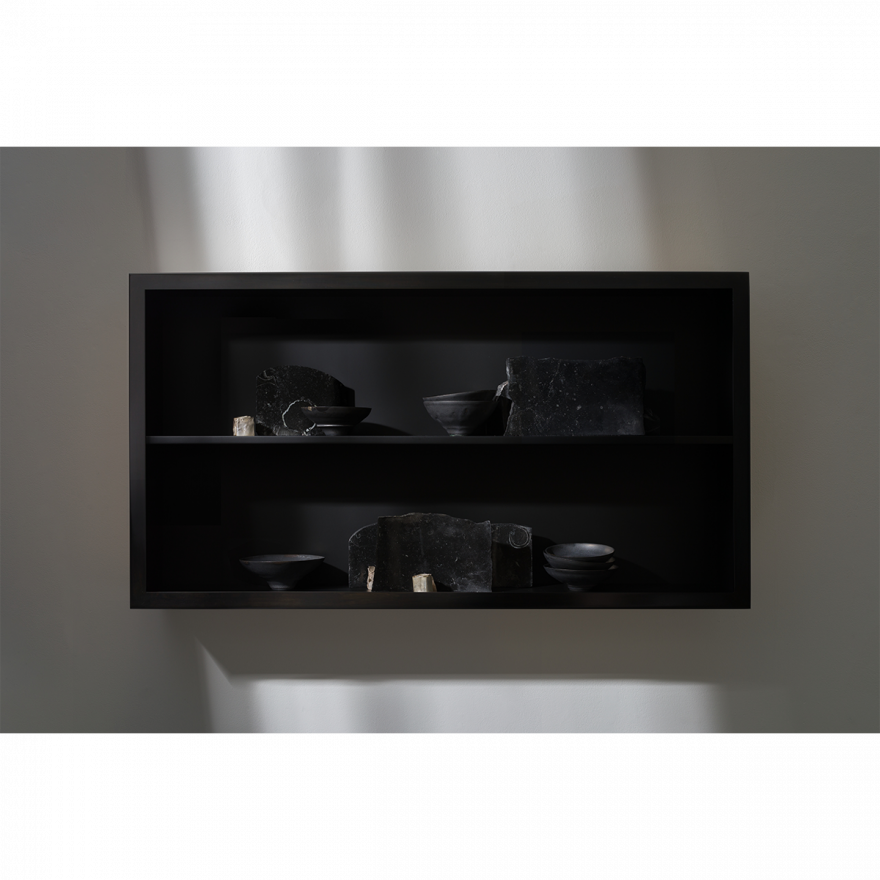
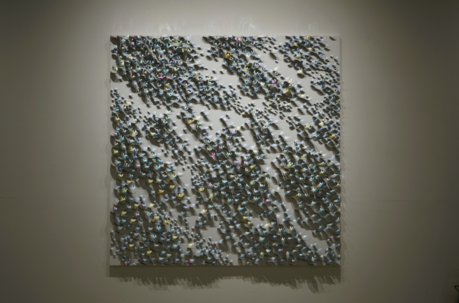
'Coptic Light, I', 2026, Porcelain, Silver, Kilkenny stone, wood, aluminium and glass, 51.4x95x20cm, Courtesy of Gana Art Center
The vessels, which vary in size and shape, are positioned at measured intervals along narrow shelves inside a white vitrine. Their spacing functions like the gaps between lines in a poem or notes in a musical score.
While Lee’s poem uses rain to address memories of his father and experiences of loss, de Waal’s installation considers movement, absence and the memories carried by objects. The artist describes the work as a meditative record of his decades-long study of celadon color.
“Coptic Light” takes its title from an orchestral work by American composer Morton Feldman. The installation combines dark-glazed ceramics with black marble from Kilkenny, Ireland, and pieces of silver. Fossil traces in the marble refer to geological time preceding human history.
“precious beyond measure” takes its title from a text written by Joseon scholar Yi Ha-gon after his visit to the Bunwon kilns in 1709. The installation brings together de Waal’s black porcelain, fragments of 18th-century Wedgwood Black Basalt and ceramic shards from China’s Song dynasty.
By placing objects from different periods and regions within the same installations, the exhibition considers how ceramics have moved across continents and historical periods. “rain diary” runs through Oct. 4.
SayArt.net Maria Kim sayart2022@gmail.com
Fourteen Installations Examine Memory and the Movement of Ceramic ObjectsThe installation view of the exhibition, Courtesy of Gana Art Center
British artist Edmund de Waal will open his solo exhibition “rain diary” at Gana Art Center in Seoul’s Pyeongchang-dong district on Aug. 28.
The exhibition brings together 14 installations made during the past two years. The works combine ceramic vessels with metal, marble and historical fragments to examine memory and the movement of objects.
De Waal began working with clay as a child and later completed a two-year apprenticeship with British potter Geoffrey Whiting. After graduating from the University of Cambridge, he studied Japanese ceramics at the Mejiro Ceramics Studio in Tokyo.
He also works as a writer. His 2010 family memoir “The Hare with Amber Eyes” traces the journeys of 264 Japanese netsuke inherited through his family and uses the objects to examine the history of a European Jewish family.
The exhibition’s title work, “rain diary,” consists of 118 celadon-glazed vessels and 14 small porcelain boxes containing fragments of ceramic and silver. Its title is drawn from a poem by Indonesian-born American poet Li-Young Lee.
'Coptic Light, I', 2026, Porcelain, Silver, Kilkenny stone, wood, aluminium and glass, 51.4x95x20cm, Courtesy of Gana Art Center
The vessels, which vary in size and shape, are positioned at measured intervals along narrow shelves inside a white vitrine. Their spacing functions like the gaps between lines in a poem or notes in a musical score.
While Lee’s poem uses rain to address memories of his father and experiences of loss, de Waal’s installation considers movement, absence and the memories carried by objects. The artist describes the work as a meditative record of his decades-long study of celadon color.
“Coptic Light” takes its title from an orchestral work by American composer Morton Feldman. The installation combines dark-glazed ceramics with black marble from Kilkenny, Ireland, and pieces of silver. Fossil traces in the marble refer to geological time preceding human history.
“precious beyond measure” takes its title from a text written by Joseon scholar Yi Ha-gon after his visit to the Bunwon kilns in 1709. The installation brings together de Waal’s black porcelain, fragments of 18th-century Wedgwood Black Basalt and ceramic shards from China’s Song dynasty.
By placing objects from different periods and regions within the same installations, the exhibition considers how ceramics have moved across continents and historical periods. “rain diary” runs through Oct. 4.
Warning: Trying to access array offset on value of type bool in /home/sayart/public_html/_libs/smarty/templates_c/103e99f6d7d08ee6b6541efd32c0ef2f33076acc_0.file.news_3t_view.tpl.php on line 56
Warning: Trying to access array offset on value of type bool in /home/sayart/public_html/_libs/smarty/templates_c/103e99f6d7d08ee6b6541efd32c0ef2f33076acc_0.file.news_3t_view.tpl.php on line 59