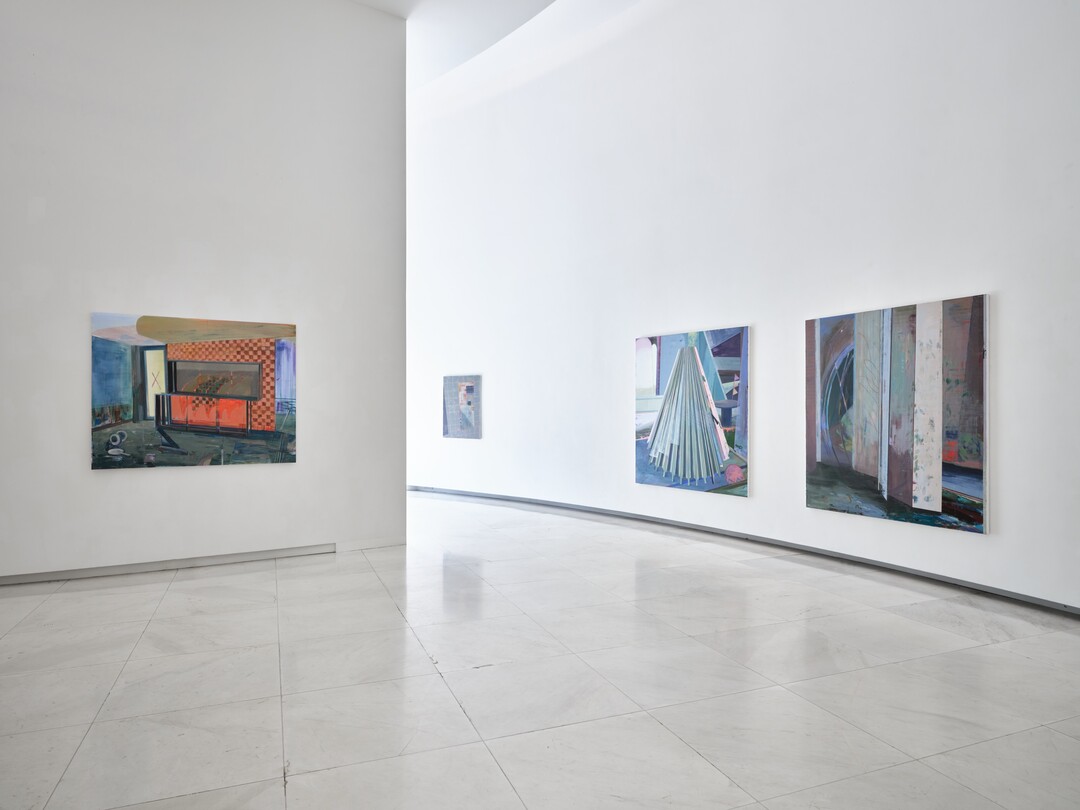
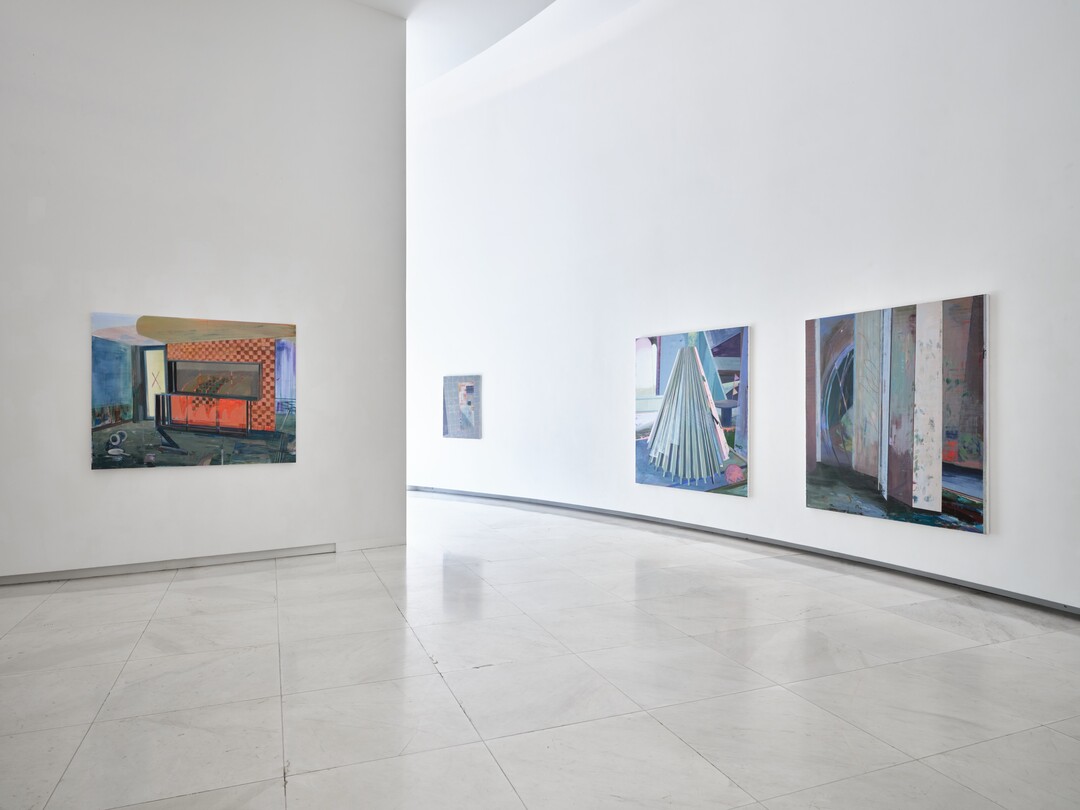
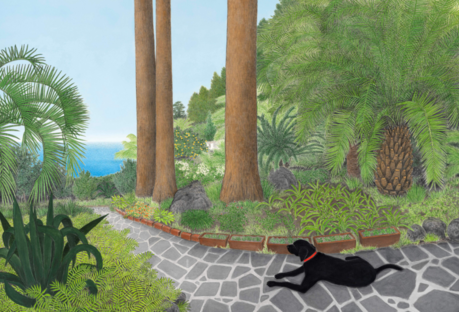
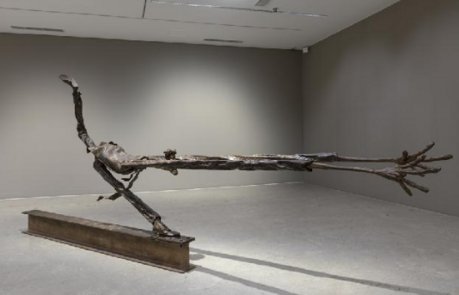
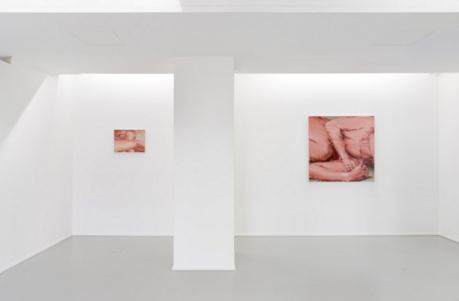
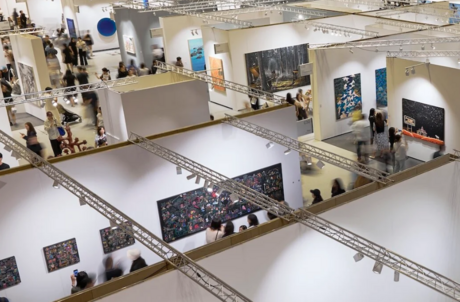
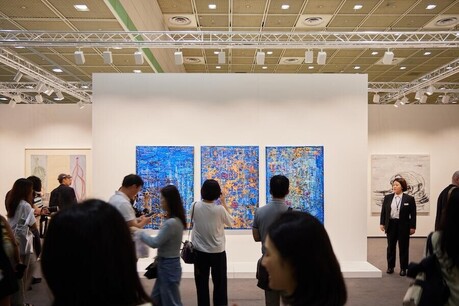
The installation view of the exhibition, Courtesy of Mimesis Art Museum
Mimesis Art Museum is presenting “SYMBOLIC,” an exhibition examining how symbols are formed, altered and reinterpreted.
The exhibition runs through Nov. 1 throughout the museum in Paju, Gyeonggi Province. It features Juna Lee, Soojung Jung and Sejin Hong and is curated by Mimesis Art Museum senior curator Dami Hyung.
Rather than treating symbols as signs with fixed meanings, the exhibition considers how they change according to historical, cultural and personal contexts.
Its premise draws on the Greek word “symbolon,” referring to an object divided between two people and later reassembled as a means of recognition. The exhibition shifts its focus from the completed noun “symbol” toward the incomplete state described by the adjective “symbolic.”
The exhibition sequence moves through Hong’s “SYMBOLIC_flat,” Jung’s “SYMBOLIC_shadow” and Lee’s “SYMBOLIC_layer.”
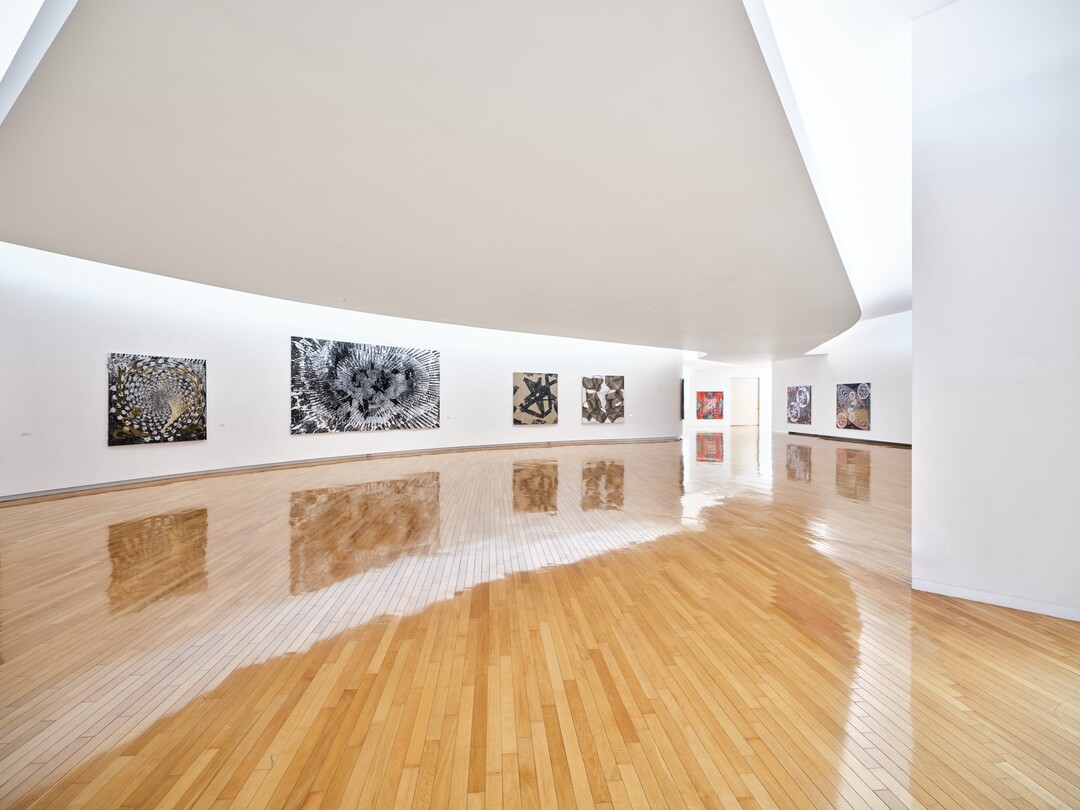
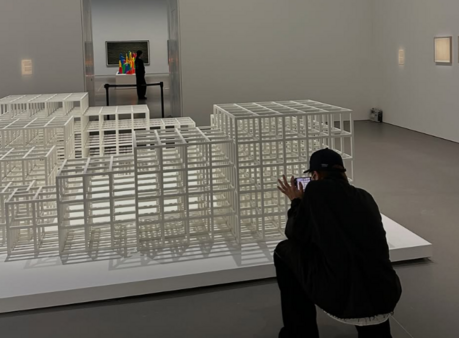
The installation view of the exhibition, Courtesy of Mimesis Art Museum
Hong translates changes in sensory perception experienced through hearing aids and a cochlear implant into painting. Everyday spaces and objects are divided into flat planes and lines, with forms of digital image processing, including layering and fragmentation, incorporated into the composition.
Paint pushed or scraped across the canvas, along with masking marks and uneven surfaces, represents noise, loss and erasure produced when signals are transmitted through technology. Works including “Hidden Surface,” “Wave of Triangles” and “Next and Next” examine how sensory information is selected and reconstructed.
Jung combines motifs drawn from classical art with figures and animals associated with comics and animation. In “Swooping” and “Surging,” groups of birds and rats move across large canvases, suggesting individuals caught in collective movement.
Her paintings also borrow from historical subjects and formats including nymphs, Northern European still lifes and tronies. Bright colors and smooth, illustration-like surfaces are used to address reproduction, desire and impulses beyond conscious control.
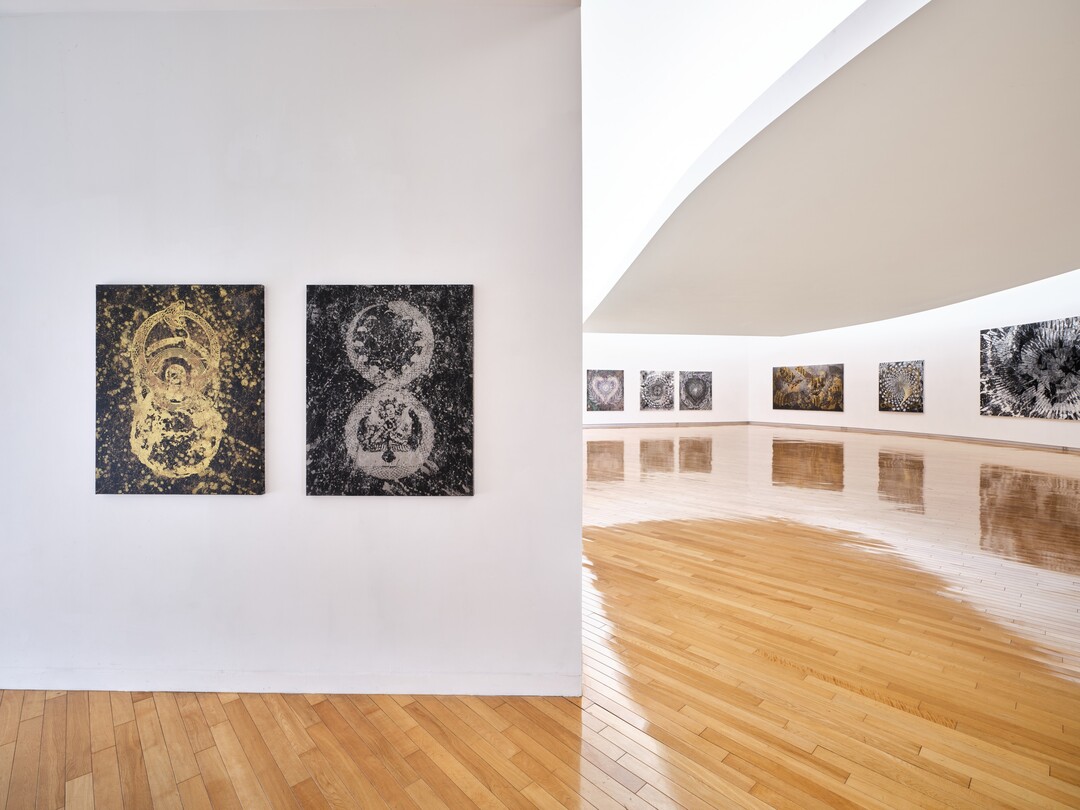
The installation view of the exhibition, Courtesy of Mimesis Art Museum
Lee collects symbols including hearts, crosses, snakes and mandalas from books, online sources, tattoos and commercial decoration. The selected images are converted into physical templates and repeatedly applied through a stencil process.
As layers accumulate, the original forms become difficult to distinguish, leaving thick paint and partially stripped surfaces. “Mandala (Celestial Bodies),” completed in 2024, measures 192×192cm and was made with acrylic and polymer spray paint on canvas.
According to the museum, Lee’s practice of collecting and layering symbols is connected to an attempt to understand and mourn her father, who experienced torture during South Korea’s democratization movement and subsequently lived with mental illness. The work connects this family history with religious and cultural symbols reused over long periods.
Artist talks are scheduled for Sept. 12 with Lee, Sept. 19 with Jung and Oct. 17 with Hong. Each session will be moderated by Hyung and is free for up to 30 participants with advance registration.
The museum is open daily from 10 a.m. to 7 p.m. General admission is 11,000 won, with a reduced fee of 9,000 won for Paju residents.
SayArt.net Maria Kim sayart2022@gmail.com
Three-artist exhibition brings together work by Juna Lee, Soojung Jung and Sejin HongThe installation view of the exhibition, Courtesy of Mimesis Art Museum
Mimesis Art Museum is presenting “SYMBOLIC,” an exhibition examining how symbols are formed, altered and reinterpreted.
The exhibition runs through Nov. 1 throughout the museum in Paju, Gyeonggi Province. It features Juna Lee, Soojung Jung and Sejin Hong and is curated by Mimesis Art Museum senior curator Dami Hyung.
Rather than treating symbols as signs with fixed meanings, the exhibition considers how they change according to historical, cultural and personal contexts.
Its premise draws on the Greek word “symbolon,” referring to an object divided between two people and later reassembled as a means of recognition. The exhibition shifts its focus from the completed noun “symbol” toward the incomplete state described by the adjective “symbolic.”
The exhibition sequence moves through Hong’s “SYMBOLIC_flat,” Jung’s “SYMBOLIC_shadow” and Lee’s “SYMBOLIC_layer.”
The installation view of the exhibition, Courtesy of Mimesis Art Museum
Hong translates changes in sensory perception experienced through hearing aids and a cochlear implant into painting. Everyday spaces and objects are divided into flat planes and lines, with forms of digital image processing, including layering and fragmentation, incorporated into the composition.
Paint pushed or scraped across the canvas, along with masking marks and uneven surfaces, represents noise, loss and erasure produced when signals are transmitted through technology. Works including “Hidden Surface,” “Wave of Triangles” and “Next and Next” examine how sensory information is selected and reconstructed.
Jung combines motifs drawn from classical art with figures and animals associated with comics and animation. In “Swooping” and “Surging,” groups of birds and rats move across large canvases, suggesting individuals caught in collective movement.
Her paintings also borrow from historical subjects and formats including nymphs, Northern European still lifes and tronies. Bright colors and smooth, illustration-like surfaces are used to address reproduction, desire and impulses beyond conscious control.
The installation view of the exhibition, Courtesy of Mimesis Art Museum
Lee collects symbols including hearts, crosses, snakes and mandalas from books, online sources, tattoos and commercial decoration. The selected images are converted into physical templates and repeatedly applied through a stencil process.
As layers accumulate, the original forms become difficult to distinguish, leaving thick paint and partially stripped surfaces. “Mandala (Celestial Bodies),” completed in 2024, measures 192×192cm and was made with acrylic and polymer spray paint on canvas.
According to the museum, Lee’s practice of collecting and layering symbols is connected to an attempt to understand and mourn her father, who experienced torture during South Korea’s democratization movement and subsequently lived with mental illness. The work connects this family history with religious and cultural symbols reused over long periods.
Artist talks are scheduled for Sept. 12 with Lee, Sept. 19 with Jung and Oct. 17 with Hong. Each session will be moderated by Hyung and is free for up to 30 participants with advance registration.
The museum is open daily from 10 a.m. to 7 p.m. General admission is 11,000 won, with a reduced fee of 9,000 won for Paju residents.
Warning: Trying to access array offset on value of type bool in /home/sayart/public_html/_libs/smarty/templates_c/103e99f6d7d08ee6b6541efd32c0ef2f33076acc_0.file.news_3t_view.tpl.php on line 56
Warning: Trying to access array offset on value of type bool in /home/sayart/public_html/_libs/smarty/templates_c/103e99f6d7d08ee6b6541efd32c0ef2f33076acc_0.file.news_3t_view.tpl.php on line 59