For a long time, companies entered culture by placing products inside stories.
A car appeared in a film. A handbag sat on a table. A logo was shown in the background. The logic was simple: if a product was seen in a desirable scene, the brand would be remembered. This was the age of product placement.
But the grammar is changing. Today, some brands are no longer satisfied with appearing inside culture. They want to create the cultural frame itself.
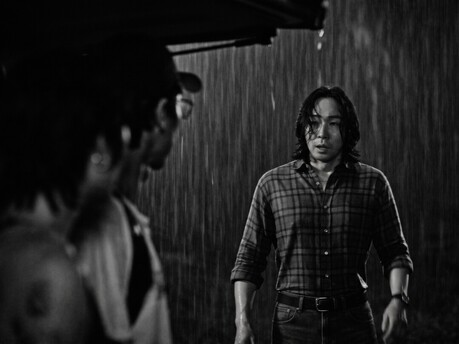
A still from Hyundai Motor’s Night Fishing. The image shows how in-car display and vehicle camera perspectives can become a cinematic point of view rather than a simple product feature. Image courtesy of Hyundai Motor Company.
Hyundai Motor’s short film Night Fishing is one of the clearest examples of this shift. Created with actor Son Sukku and director Moon Byounggon, the film used specially mounted cameras to capture scenes from the vehicle’s perspective, offering what Hyundai described as a new approach to the traditional car film. The company later described the work as a “humanistic thriller” that blends automotive technology with artistic storytelling.
What matters here is not simply that a Hyundai vehicle appears in the film. The vehicle’s technology becomes part of the film’s visual language. The car is no longer a product placed inside the scene. It becomes the camera, the point of view and the structure through which the story is experienced.
This is a meaningful difference. Product placement puts a product in front of the viewer. Cultural storytelling asks the viewer to experience the world through the brand’s sensibility.
A similar movement can be seen in the growing relationship between luxury brands and cultural space. Le Café Louis Vuitton Seoul, located at Maison Louis Vuitton Seoul, extends the brand beyond fashion and retail into food, hospitality and spatial experience. Louis Vuitton describes the café as combining Korean-infused flavors with the House’s creations, presenting the brand not only as something to wear or carry, but as something to inhabit and taste.
Centre Pompidou Hanwha shows the same shift on a larger cultural scale. Opened in June 2026 in Seoul, the institution is housed in a former annex of the 63 Building in Yeouido and designed by Jean-Michel Wilmotte. The Centre Pompidou describes the project as a new arts institution in South Korea, created in the form of a “light box” in the heart of Seoul.
This is no longer sponsorship in the old sense. It is not simply a company logo placed beside an exhibition title. It is corporate participation in the creation of cultural infrastructure. A company becomes a partner in building the places where culture is seen, discussed and remembered.
The shift is significant because consumers are changing too. People no longer encounter brands only through advertisements. They meet them through films, cafés, exhibitions, pop-ups, architecture, playlists, collaborations and digital experiences. A brand is no longer just a maker of objects. It is increasingly a maker of situations.
A still from Hyundai Motor’s Night Fishing. The image shows how in-car display and vehicle camera perspectives can become a cinematic point of view rather than a simple product feature. Image courtesy of Hyundai Motor Company.
This does not mean every corporate cultural project is meaningful. Some remain advertising dressed as art. Some use culture as decoration. Some borrow the language of creativity without taking real risks. The question is not whether a company enters culture, but how deeply and honestly it does so.
The most successful examples do not force the product to the center. They allow the brand’s technology, memory, design language or social imagination to become part of the experience. Hyundai’s Night Fishing works because the vehicle’s camera system becomes cinematic perspective. Le Café Louis Vuitton Seoul works because the brand’s identity moves into taste and place. Centre Pompidou Hanwha matters because corporate support becomes a public cultural platform.
The age of simple exposure is weakening. The age of cultural experience is becoming stronger.
In this new landscape, the most powerful brands may not be the ones that shout their names most loudly. They may be the ones that create a scene, a space or a story that people choose to enter.
[Sayart = Maria Kim] sayart2022@gmail.com
From Hyundai Motor’s short film Night Fishing to Centre Pompidou Hanwha and Le Café Louis Vuitton Seoul, companies are expanding their role from sponsors to cultural experience makers.
For a long time, companies entered culture by placing products inside stories.
A car appeared in a film. A handbag sat on a table. A logo was shown in the background. The logic was simple: if a product was seen in a desirable scene, the brand would be remembered. This was the age of product placement.
But the grammar is changing. Today, some brands are no longer satisfied with appearing inside culture. They want to create the cultural frame itself.
A still from Hyundai Motor’s Night Fishing. The image shows how in-car display and vehicle camera perspectives can become a cinematic point of view rather than a simple product feature. Image courtesy of Hyundai Motor Company.
Hyundai Motor’s short film Night Fishing is one of the clearest examples of this shift. Created with actor Son Sukku and director Moon Byounggon, the film used specially mounted cameras to capture scenes from the vehicle’s perspective, offering what Hyundai described as a new approach to the traditional car film. The company later described the work as a “humanistic thriller” that blends automotive technology with artistic storytelling.
What matters here is not simply that a Hyundai vehicle appears in the film. The vehicle’s technology becomes part of the film’s visual language. The car is no longer a product placed inside the scene. It becomes the camera, the point of view and the structure through which the story is experienced.
This is a meaningful difference. Product placement puts a product in front of the viewer. Cultural storytelling asks the viewer to experience the world through the brand’s sensibility.
A similar movement can be seen in the growing relationship between luxury brands and cultural space. Le Café Louis Vuitton Seoul, located at Maison Louis Vuitton Seoul, extends the brand beyond fashion and retail into food, hospitality and spatial experience. Louis Vuitton describes the café as combining Korean-infused flavors with the House’s creations, presenting the brand not only as something to wear or carry, but as something to inhabit and taste.
Centre Pompidou Hanwha shows the same shift on a larger cultural scale. Opened in June 2026 in Seoul, the institution is housed in a former annex of the 63 Building in Yeouido and designed by Jean-Michel Wilmotte. The Centre Pompidou describes the project as a new arts institution in South Korea, created in the form of a “light box” in the heart of Seoul.
This is no longer sponsorship in the old sense. It is not simply a company logo placed beside an exhibition title. It is corporate participation in the creation of cultural infrastructure. A company becomes a partner in building the places where culture is seen, discussed and remembered.
The shift is significant because consumers are changing too. People no longer encounter brands only through advertisements. They meet them through films, cafés, exhibitions, pop-ups, architecture, playlists, collaborations and digital experiences. A brand is no longer just a maker of objects. It is increasingly a maker of situations.
A still from Hyundai Motor’s Night Fishing. The image shows how in-car display and vehicle camera perspectives can become a cinematic point of view rather than a simple product feature. Image courtesy of Hyundai Motor Company.
This does not mean every corporate cultural project is meaningful. Some remain advertising dressed as art. Some use culture as decoration. Some borrow the language of creativity without taking real risks. The question is not whether a company enters culture, but how deeply and honestly it does so.
The most successful examples do not force the product to the center. They allow the brand’s technology, memory, design language or social imagination to become part of the experience. Hyundai’s Night Fishing works because the vehicle’s camera system becomes cinematic perspective. Le Café Louis Vuitton Seoul works because the brand’s identity moves into taste and place. Centre Pompidou Hanwha matters because corporate support becomes a public cultural platform.
The age of simple exposure is weakening. The age of cultural experience is becoming stronger.
In this new landscape, the most powerful brands may not be the ones that shout their names most loudly. They may be the ones that create a scene, a space or a story that people choose to enter.
Warning: Trying to access array offset on value of type bool in /home/sayart/public_html/_libs/smarty/templates_c/103e99f6d7d08ee6b6541efd32c0ef2f33076acc_0.file.news_3t_view.tpl.php on line 56
Warning: Trying to access array offset on value of type bool in /home/sayart/public_html/_libs/smarty/templates_c/103e99f6d7d08ee6b6541efd32c0ef2f33076acc_0.file.news_3t_view.tpl.php on line 59